
From the evidence we have in the UK farming began in the Neolithic, and a small assemblage of crops survive in certain archaeolgical contexts. These include Emmer and Einkhorn wheats, spelt, barely, vetch, flax. Alongside these are seeds from native flowering and herbatious plants – or what we could now call weeds!
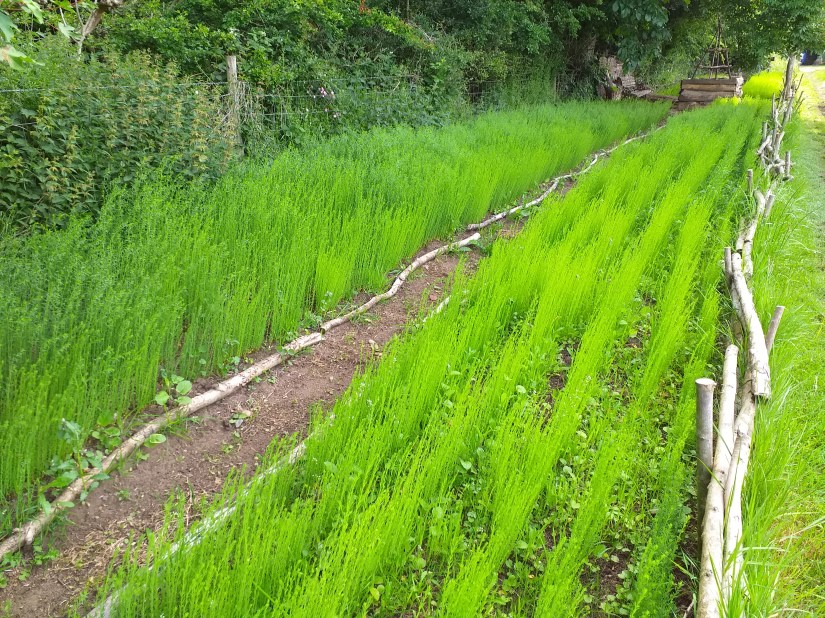
Our 2.7 acre farm is divided into several zones – some for arable crop rotation of wheats and flax, and others for the forageable and utility plants that are needed for more day to day tasks. These rotations are important. Today, we know about issues in soil health, we can use science and millennia of experience to tell us we have to add nutrition in order to get nutrition, and we have to change the crops we grow to avoid disease/parasite build-up in the soil. How long it took people to realise this n the stone age is speculative.
In October 2023, we sowed 60 kg of Emmer wheat seed across 0.7 acres. by hand, which involved 141 people-hours! Follow the progress of the plants, and our journey into using genuine Iron Age quern stones see how efficient this process was. We will use this flour to bake bread in our self-made kilns. Click here for more about Emmer wheat.

We grow flax for fiber-making, and use stone age processes to make yarn and linen. We have made spindles, and worked with plants to provide colourful dyes for our clothes, which have been woven on a warp-weighted loom. Follow the journey from plant to textile here.

 The Prehistoric Workshop