

The flax seeds (Linum usitatissimum) were sown as part of a Prehistoric Workshop activity on Sunday 10th April 2022.
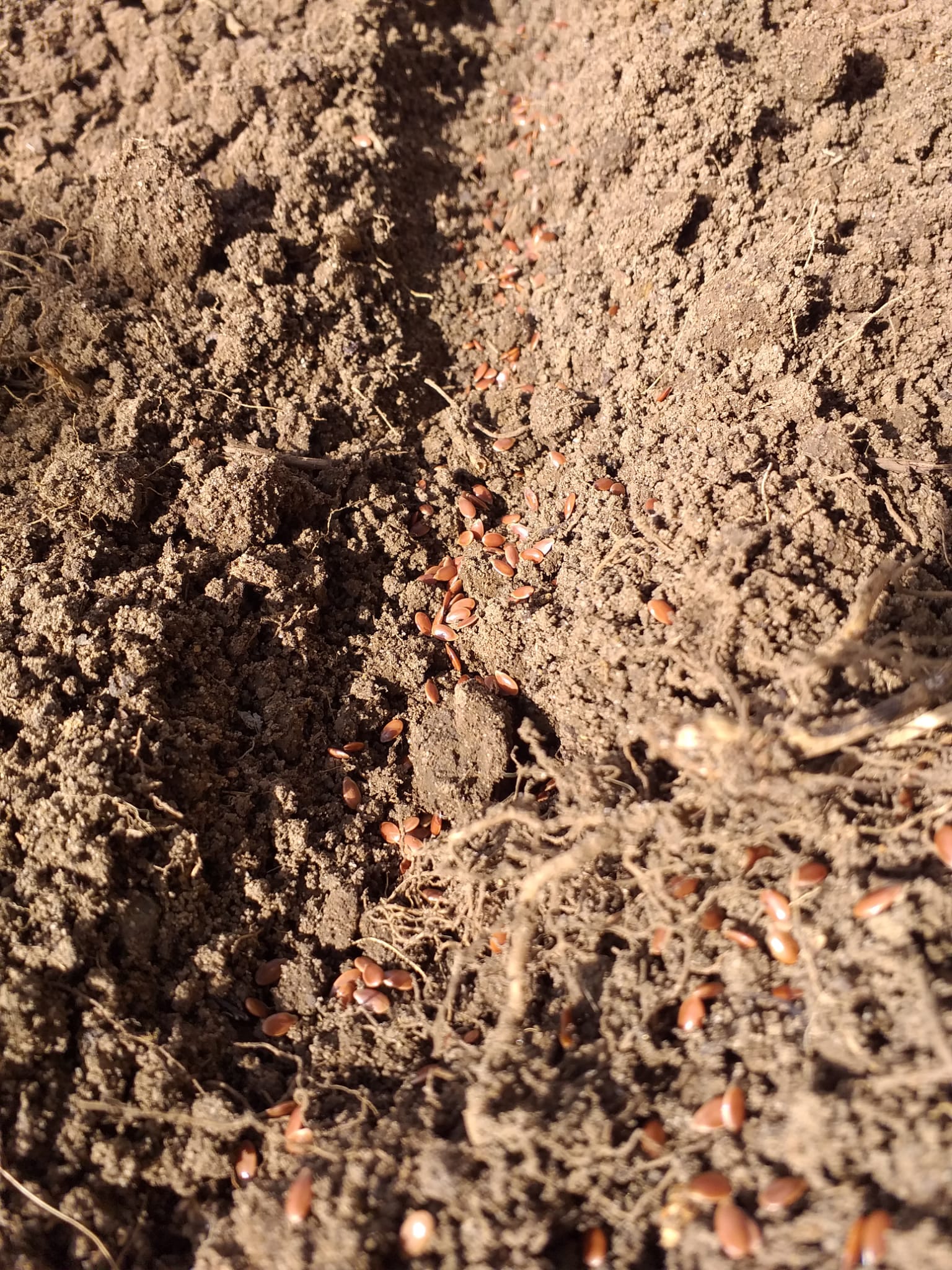
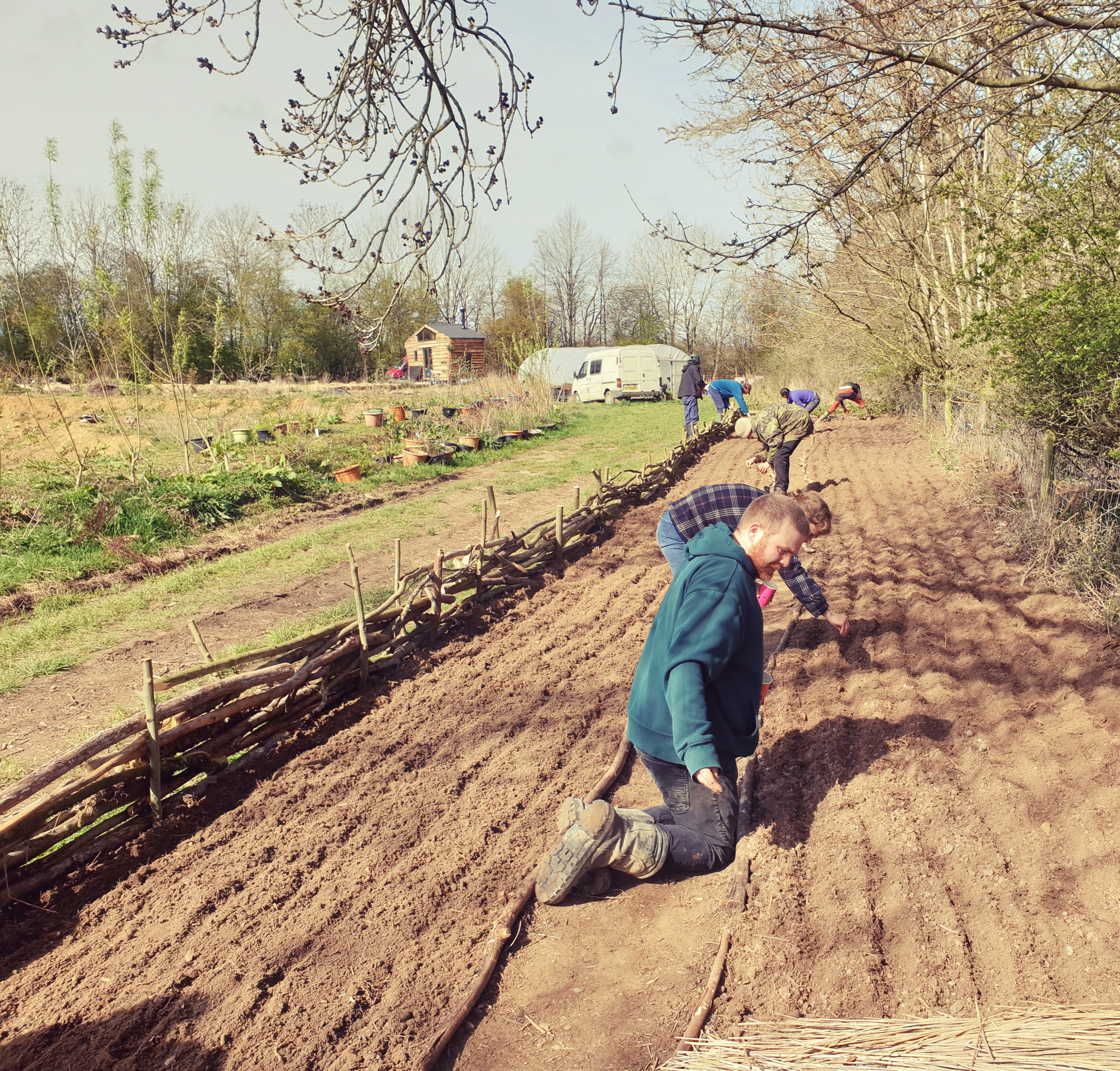

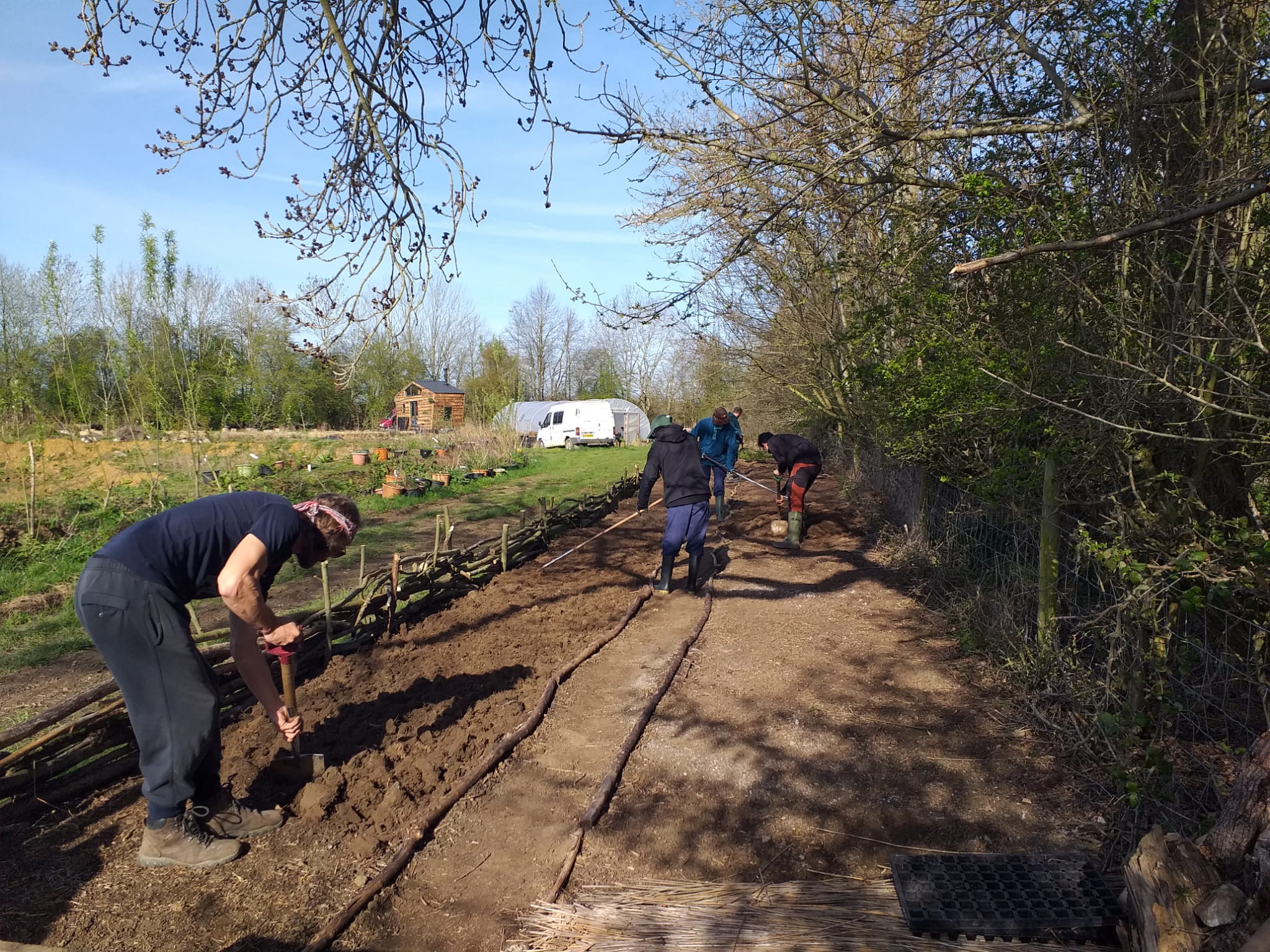
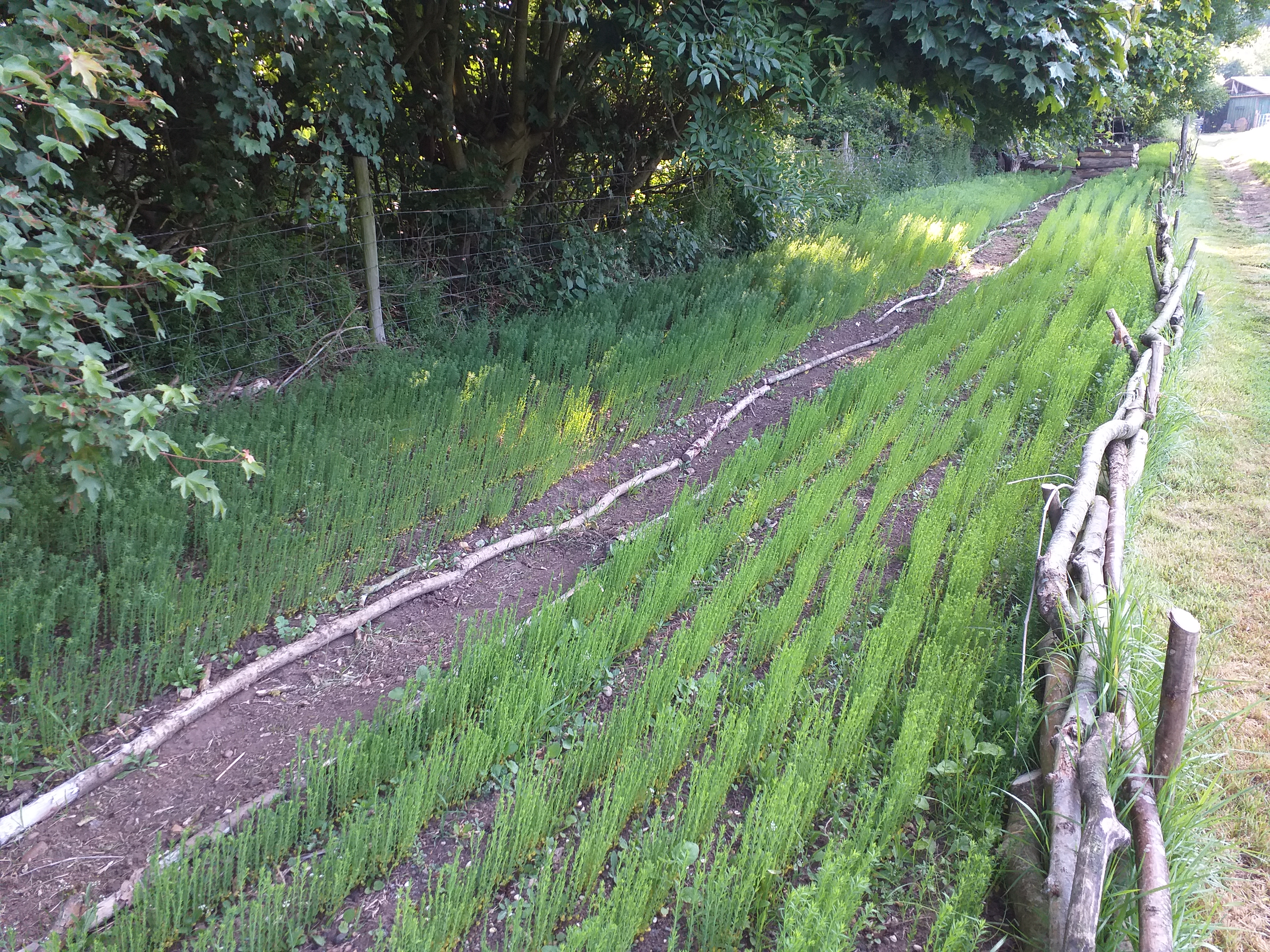
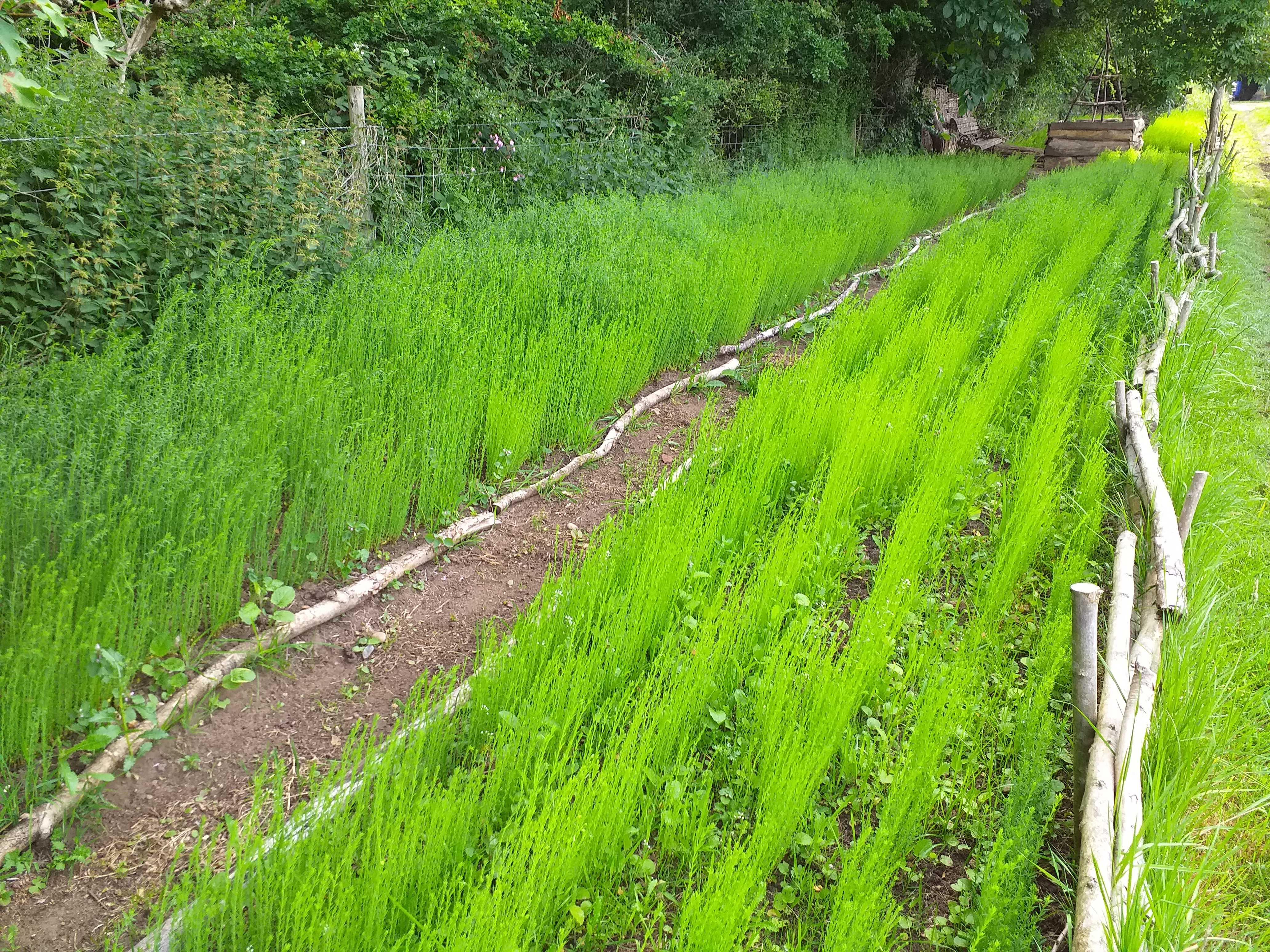
Some seeds were sown thickly in drills roughly 10-15cm apart, and some were broadcast sown. We are hoping to be able to measure the differences in growth and final fibre output and quality between these two sowing methods.
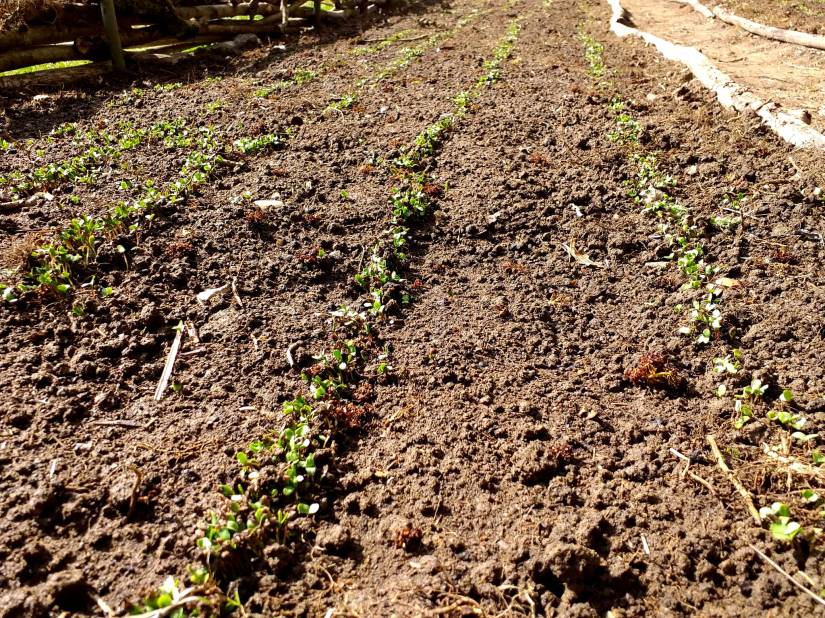
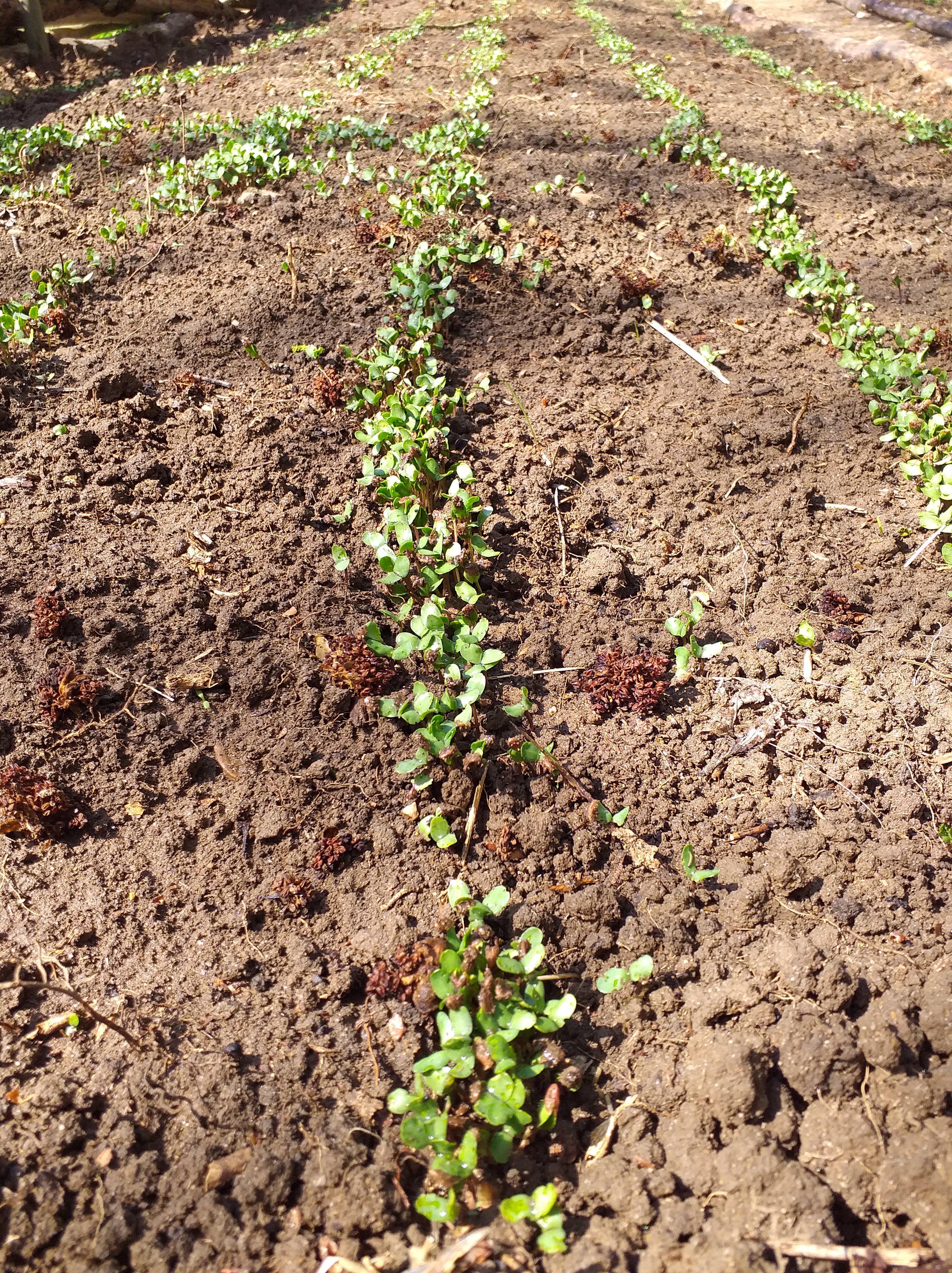
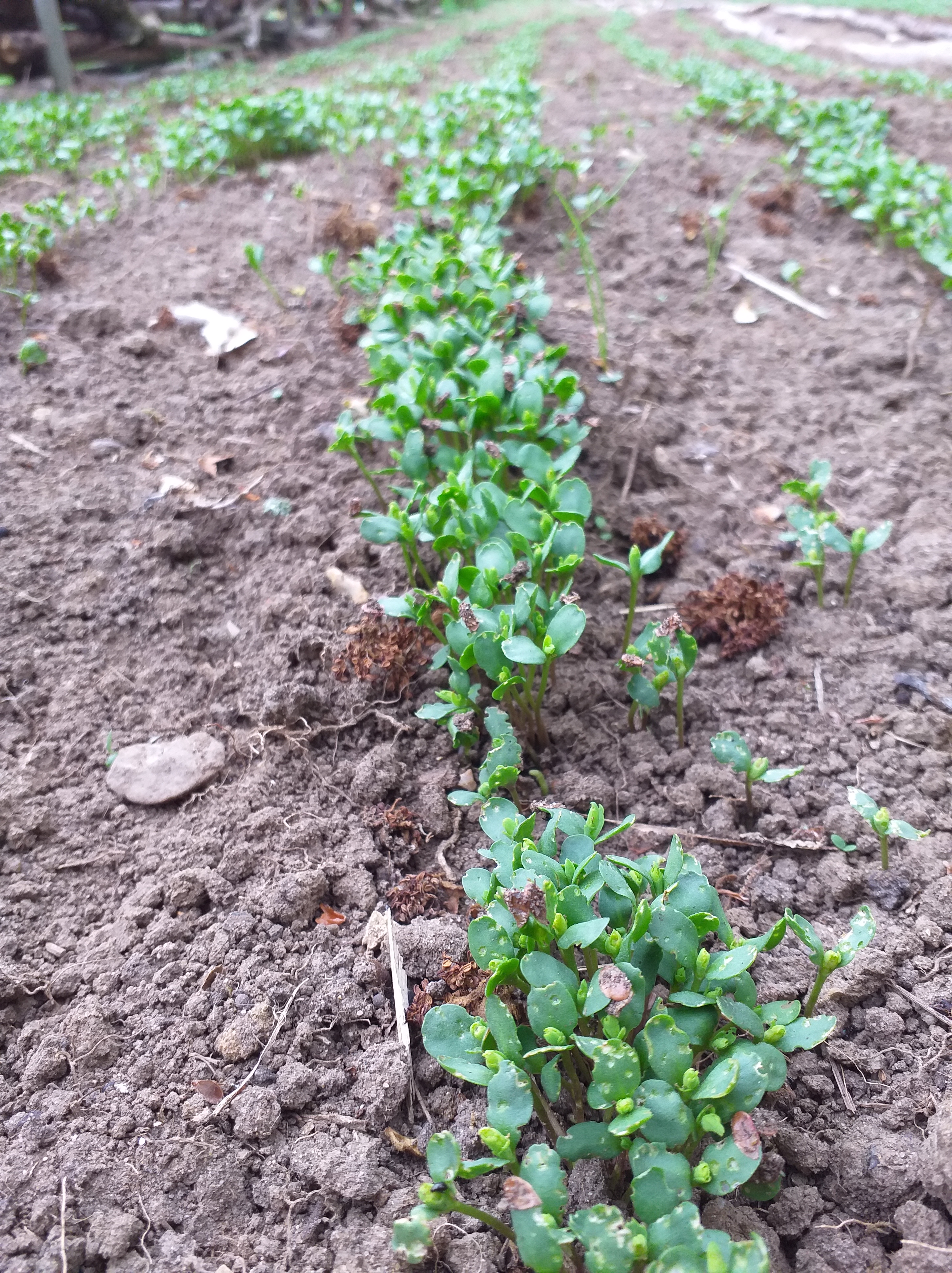
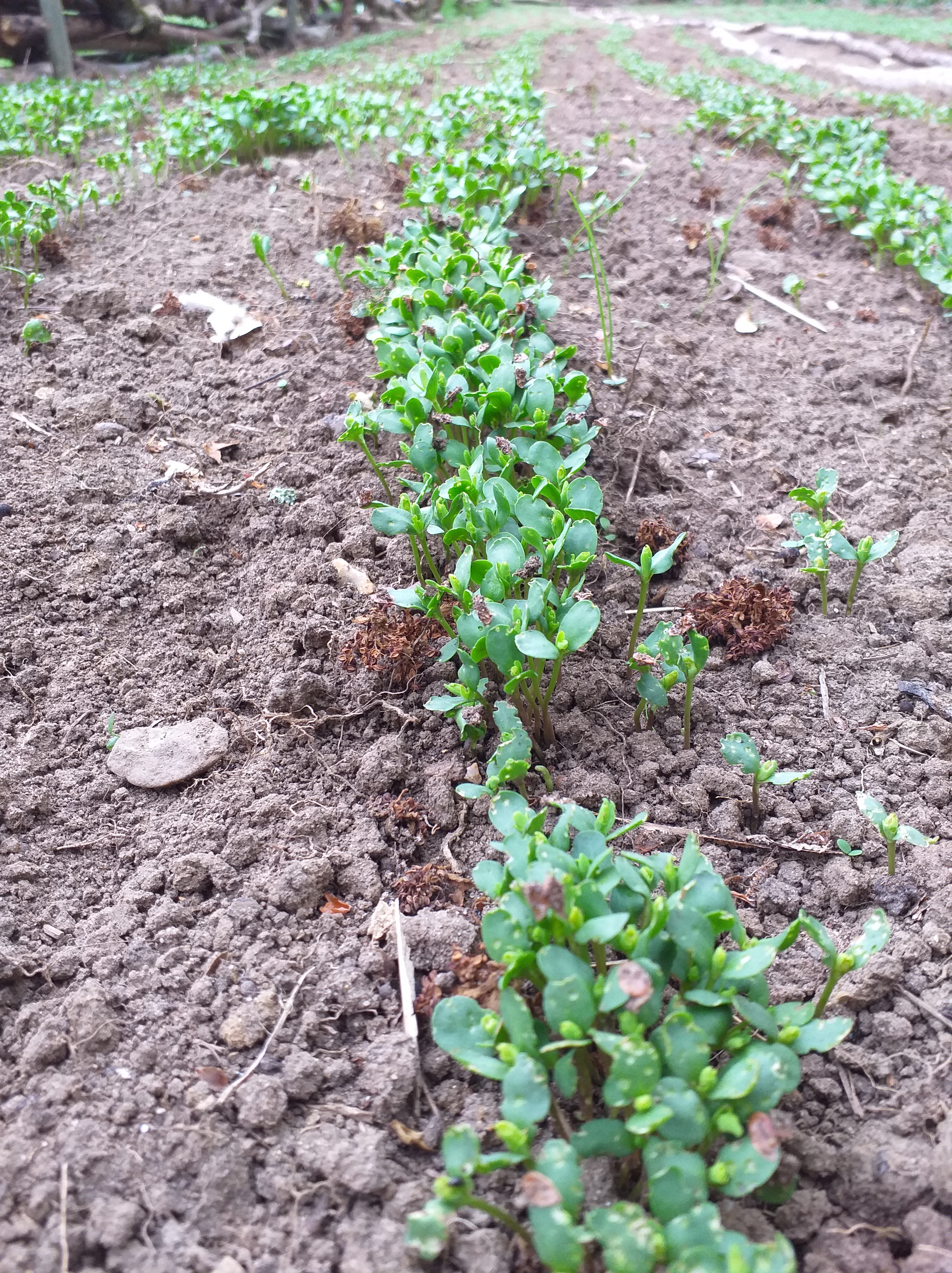
Germination occured on 14th April.
The dyeing garden plants were sown on 17th April. The next workshop for the Fibres that Bind Us project will be in a few weeks time once the plants are established enough to plant out. We look forward to seeing you there! You can join our mailing list or get in touch for more details: THIS EVENT HAS PASSED.
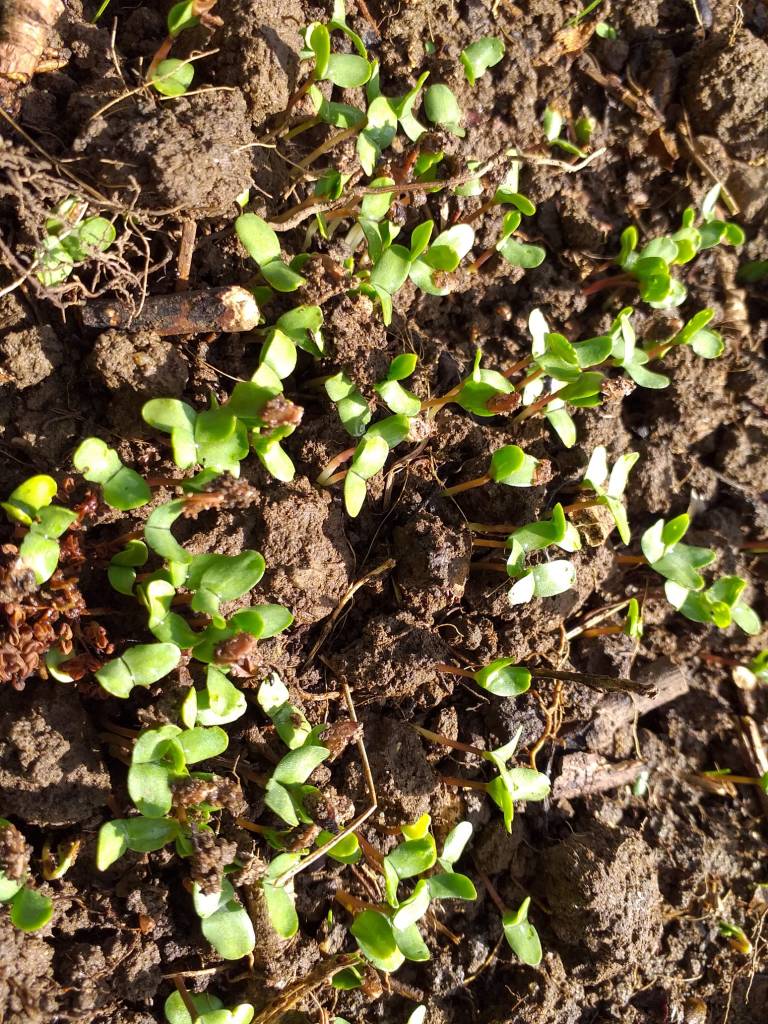
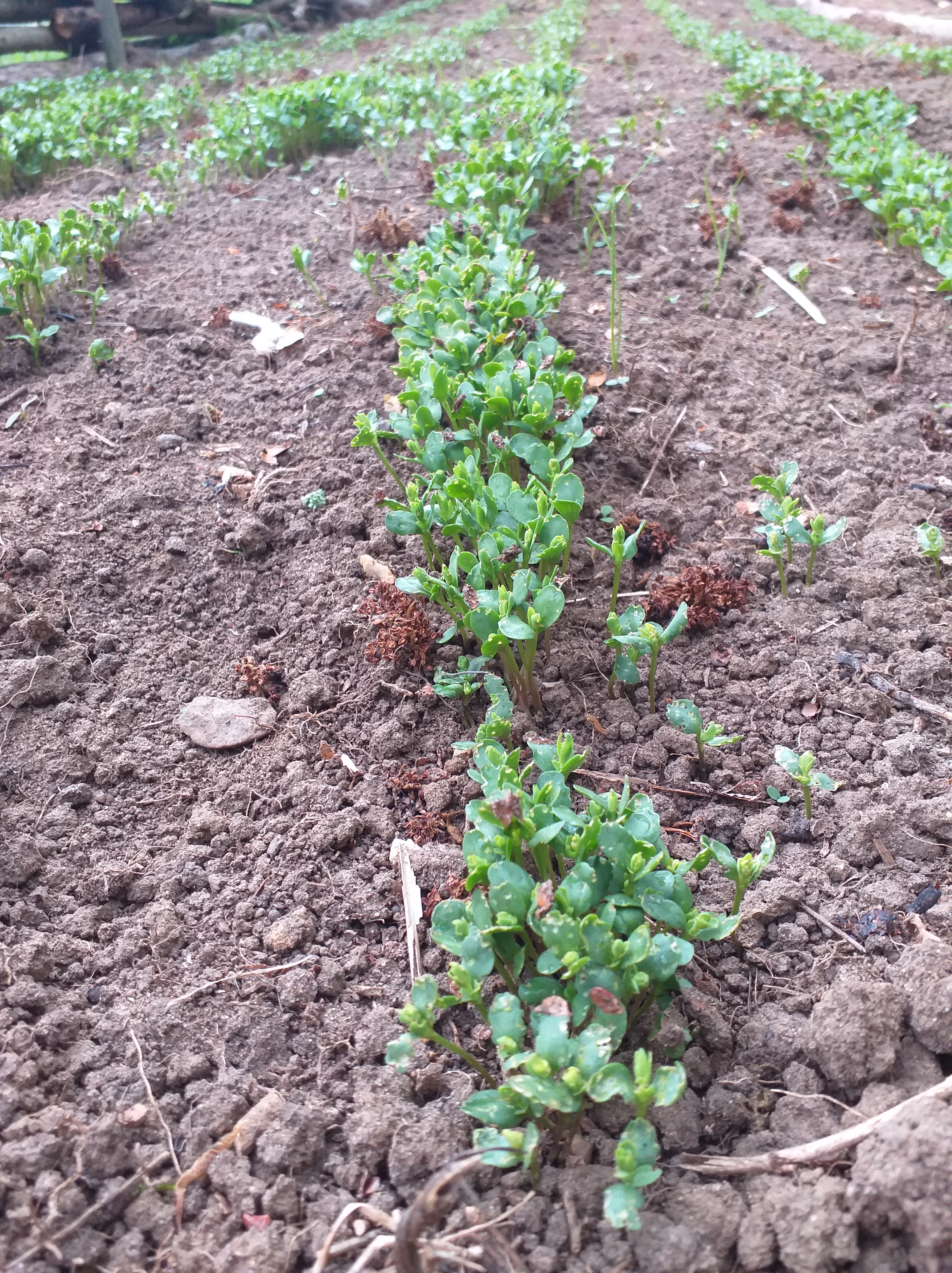
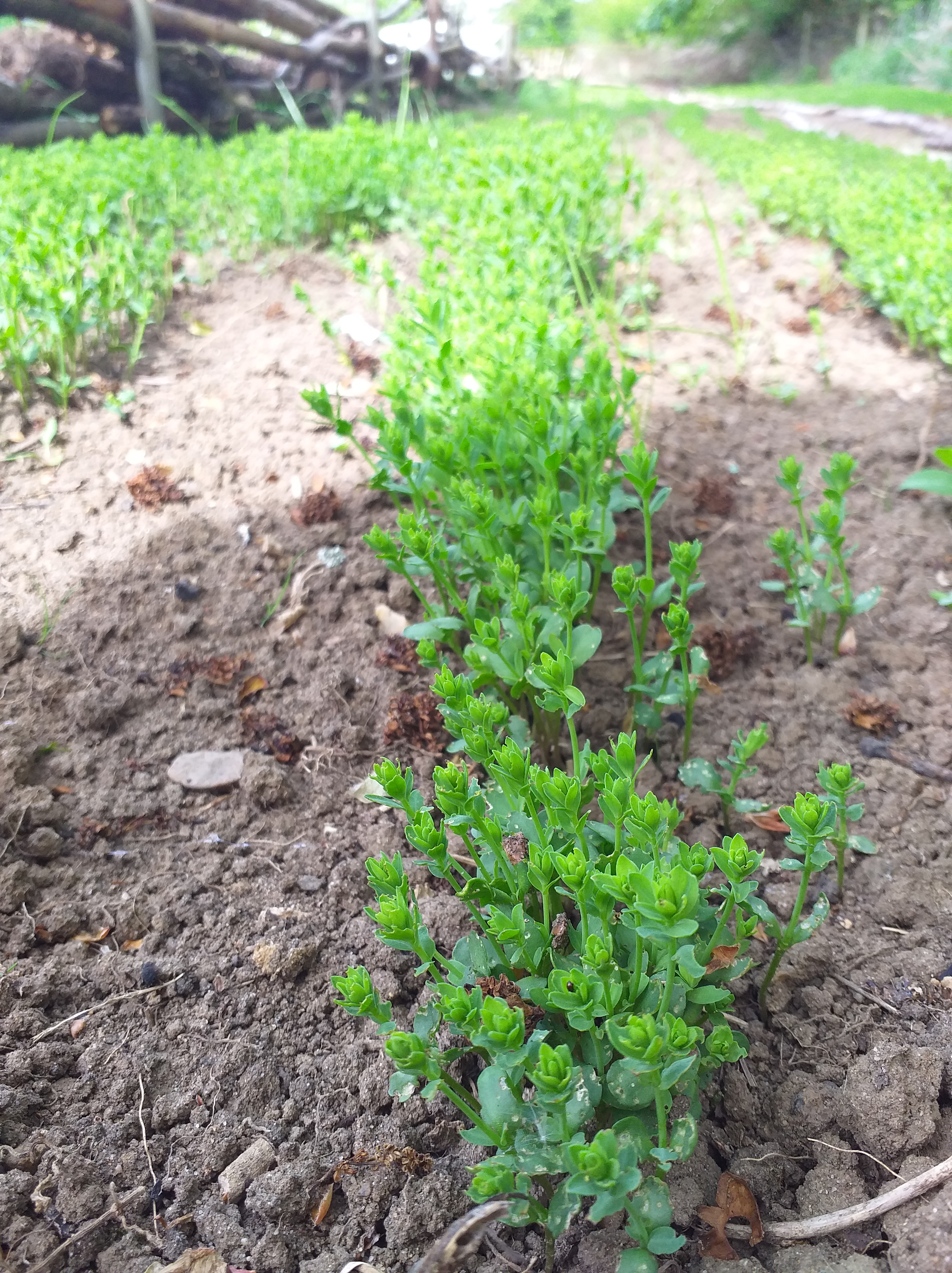
The plants required a little additional watering for the first 2 weeks after germination due to exceptionally hot weather.
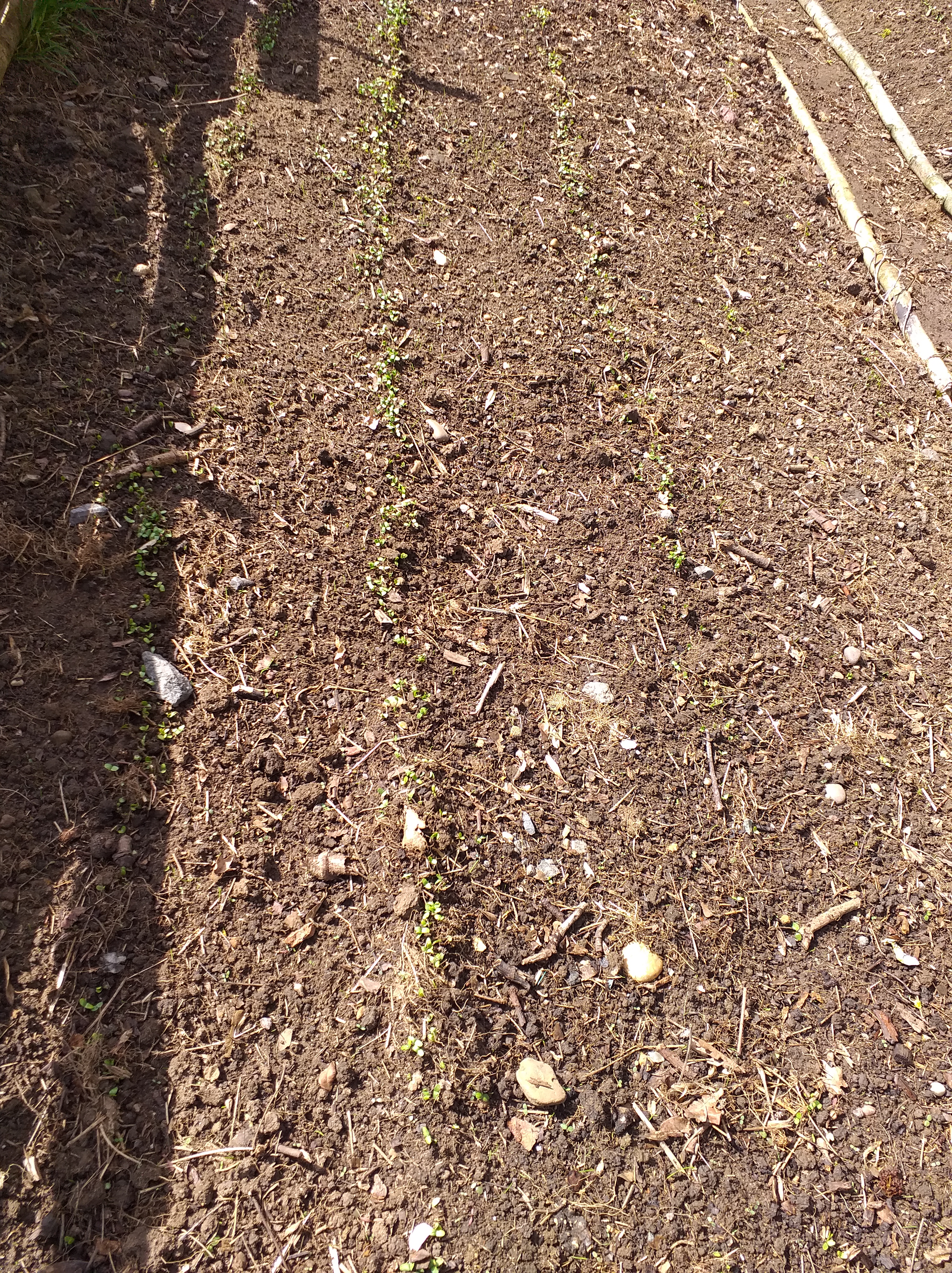
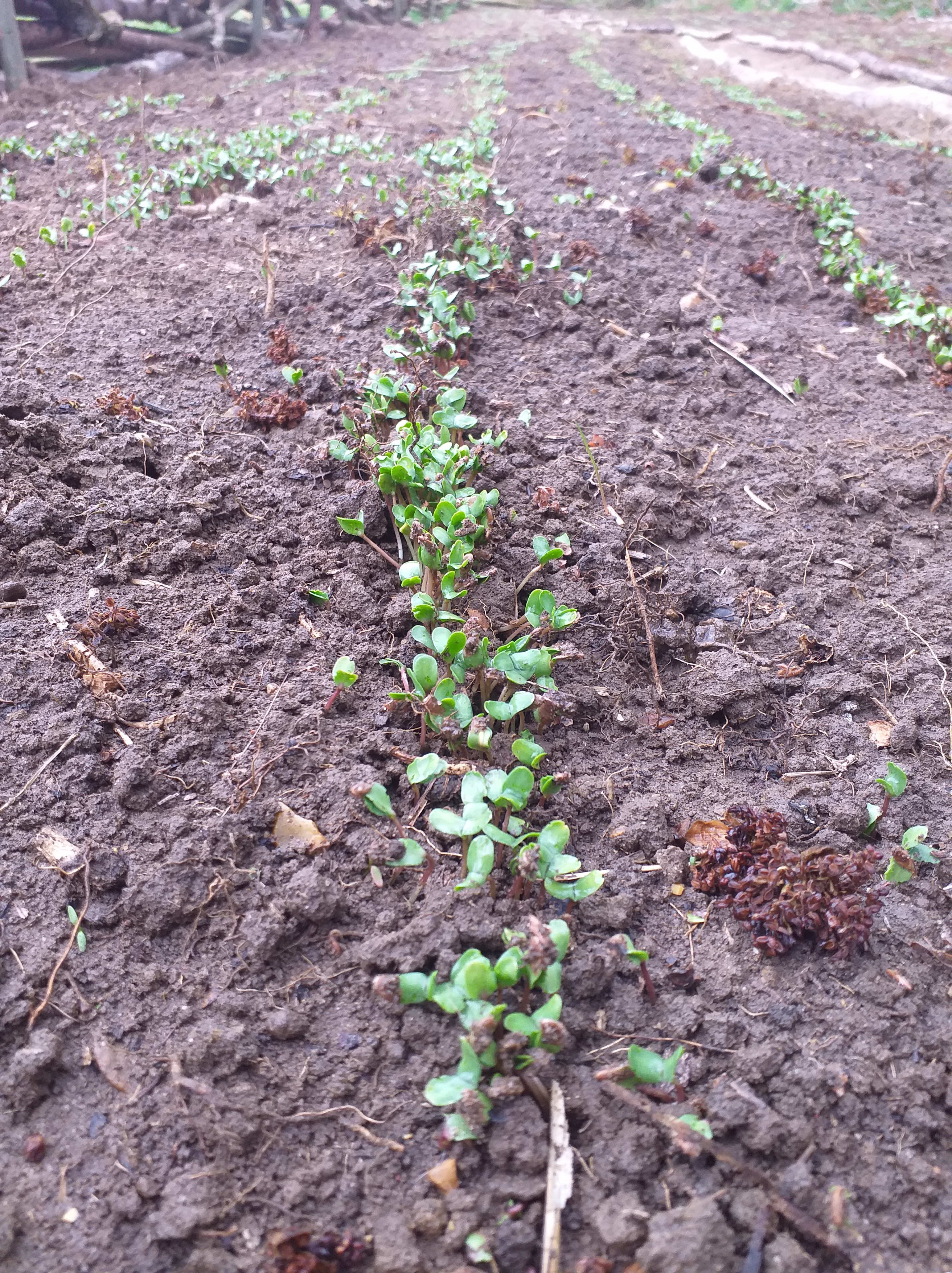
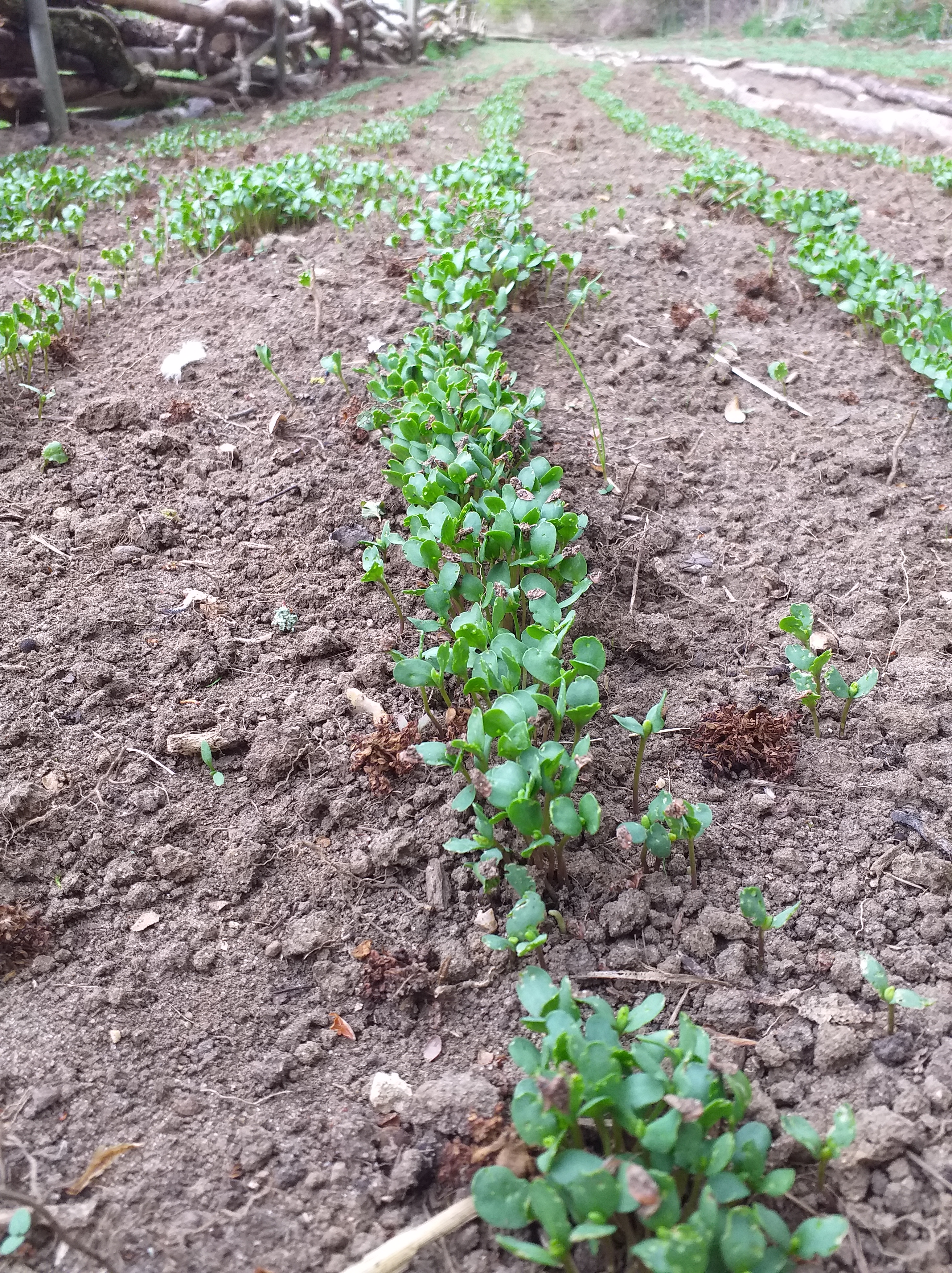
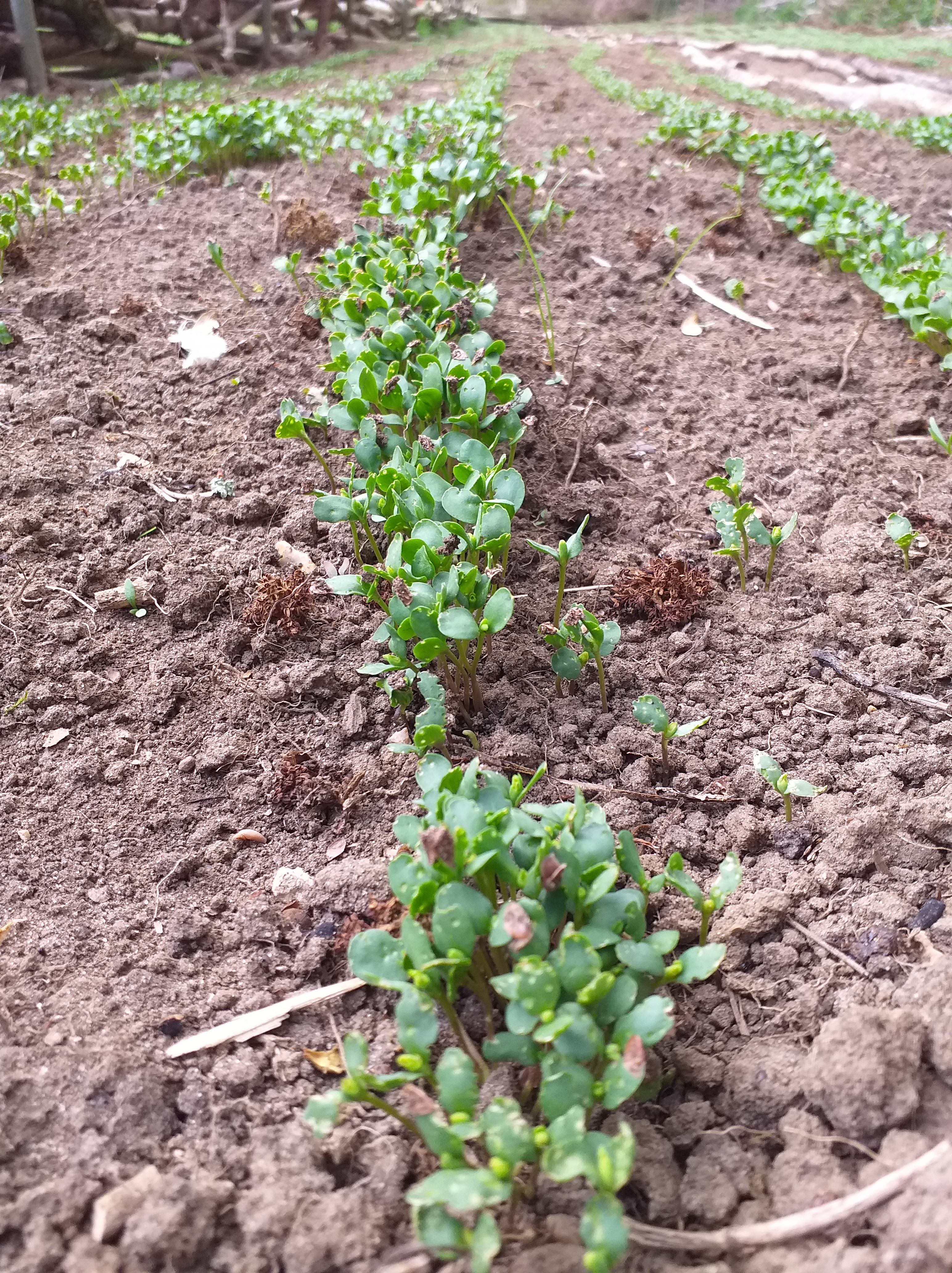
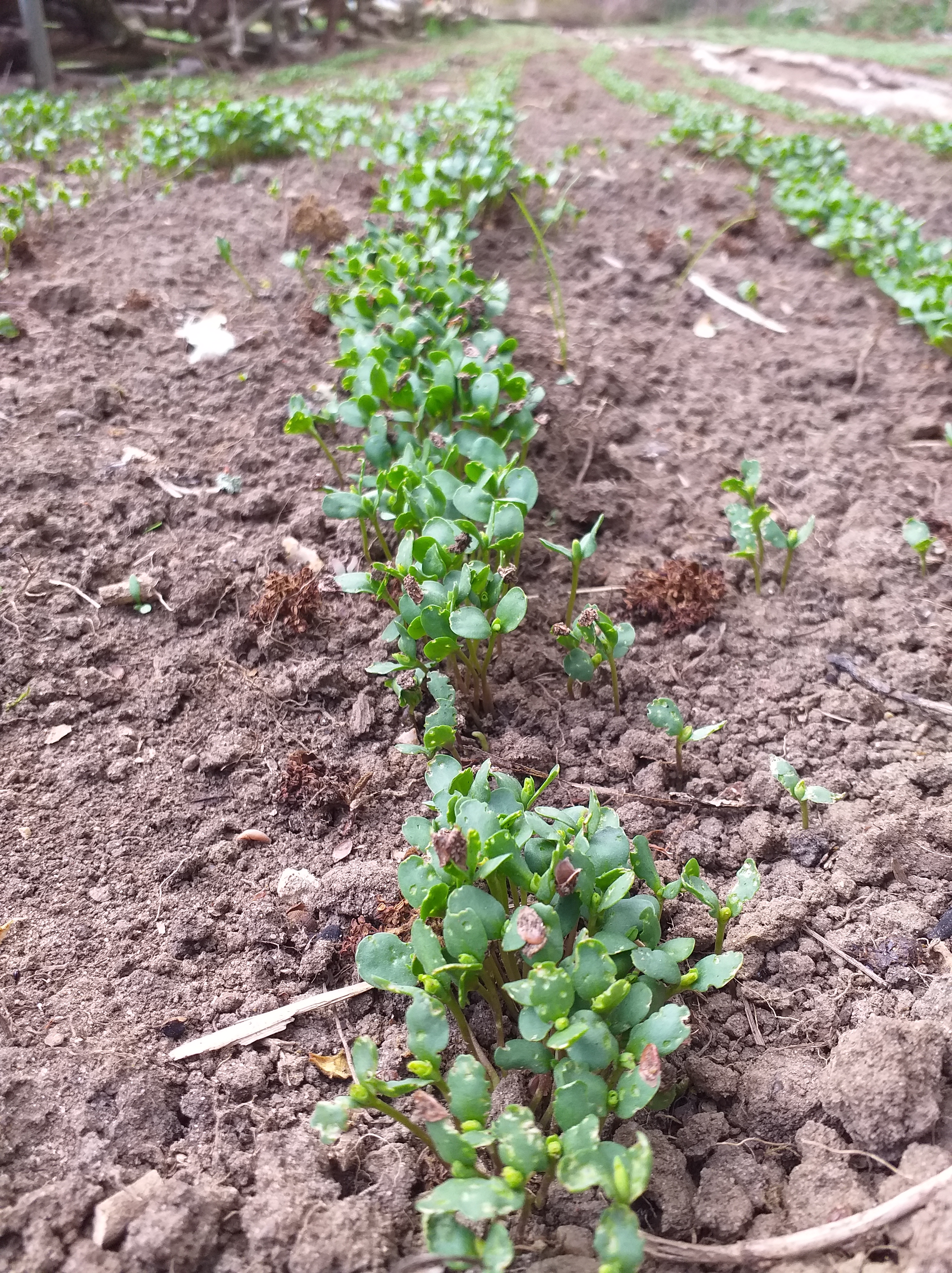
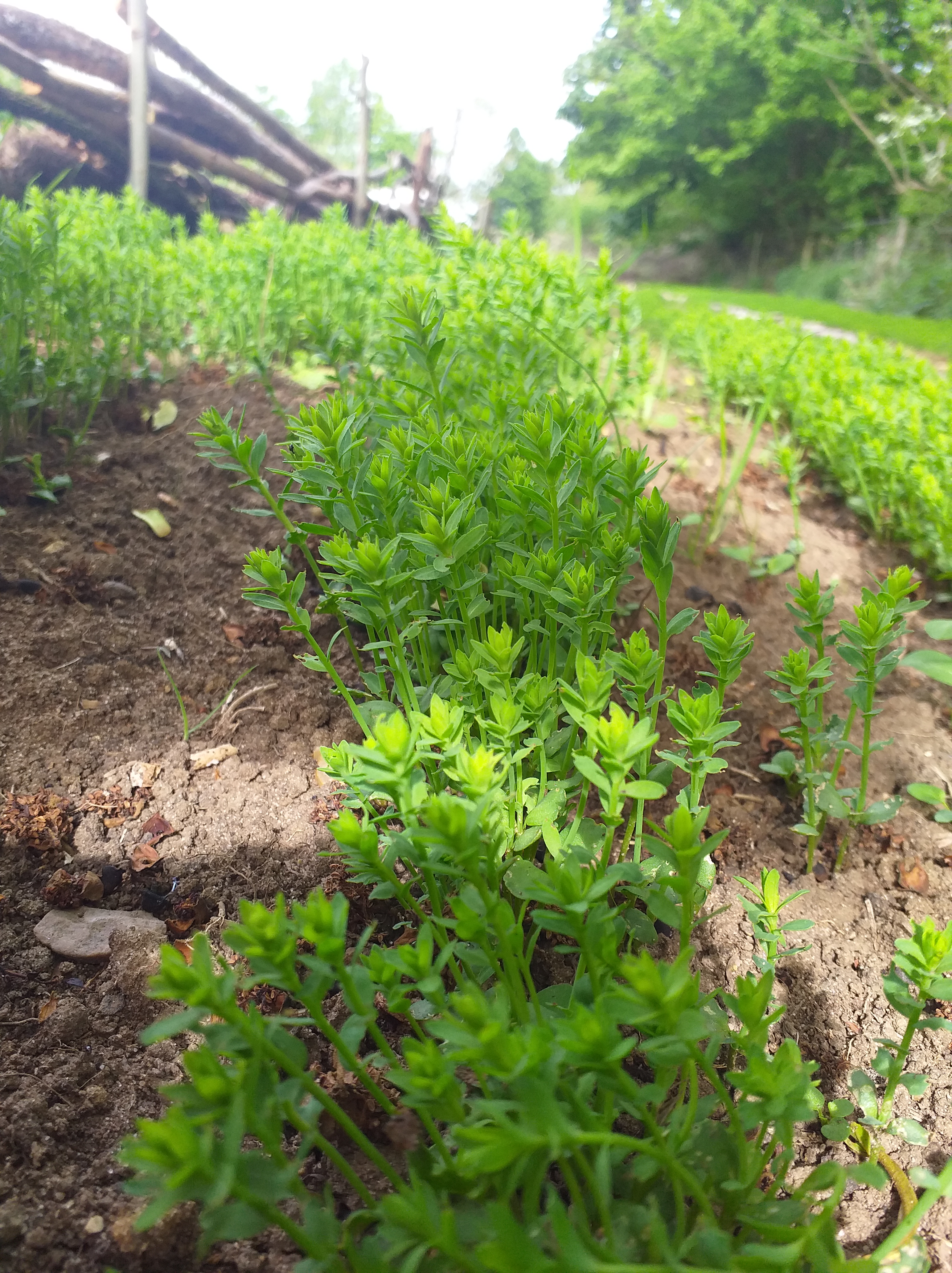
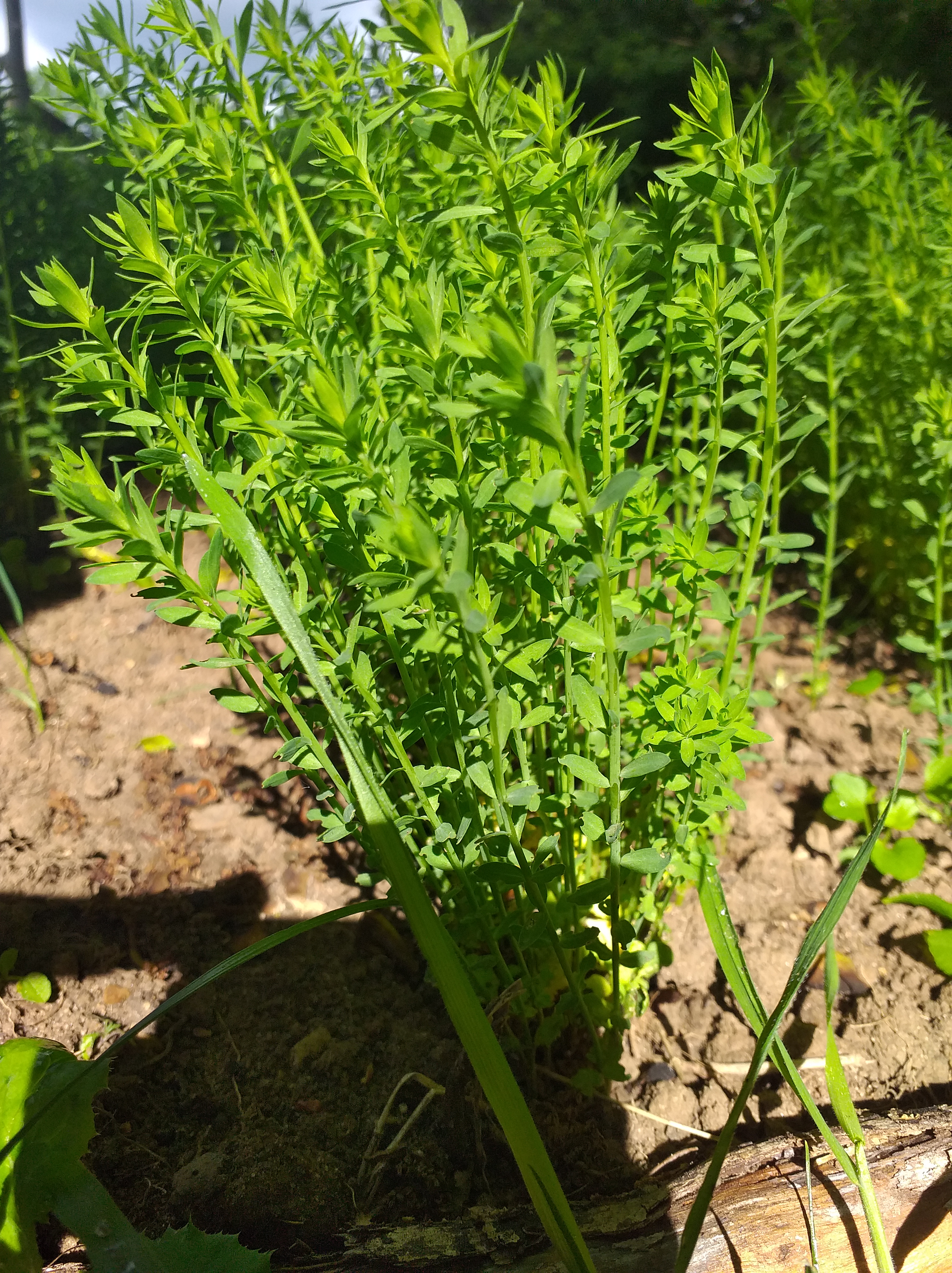
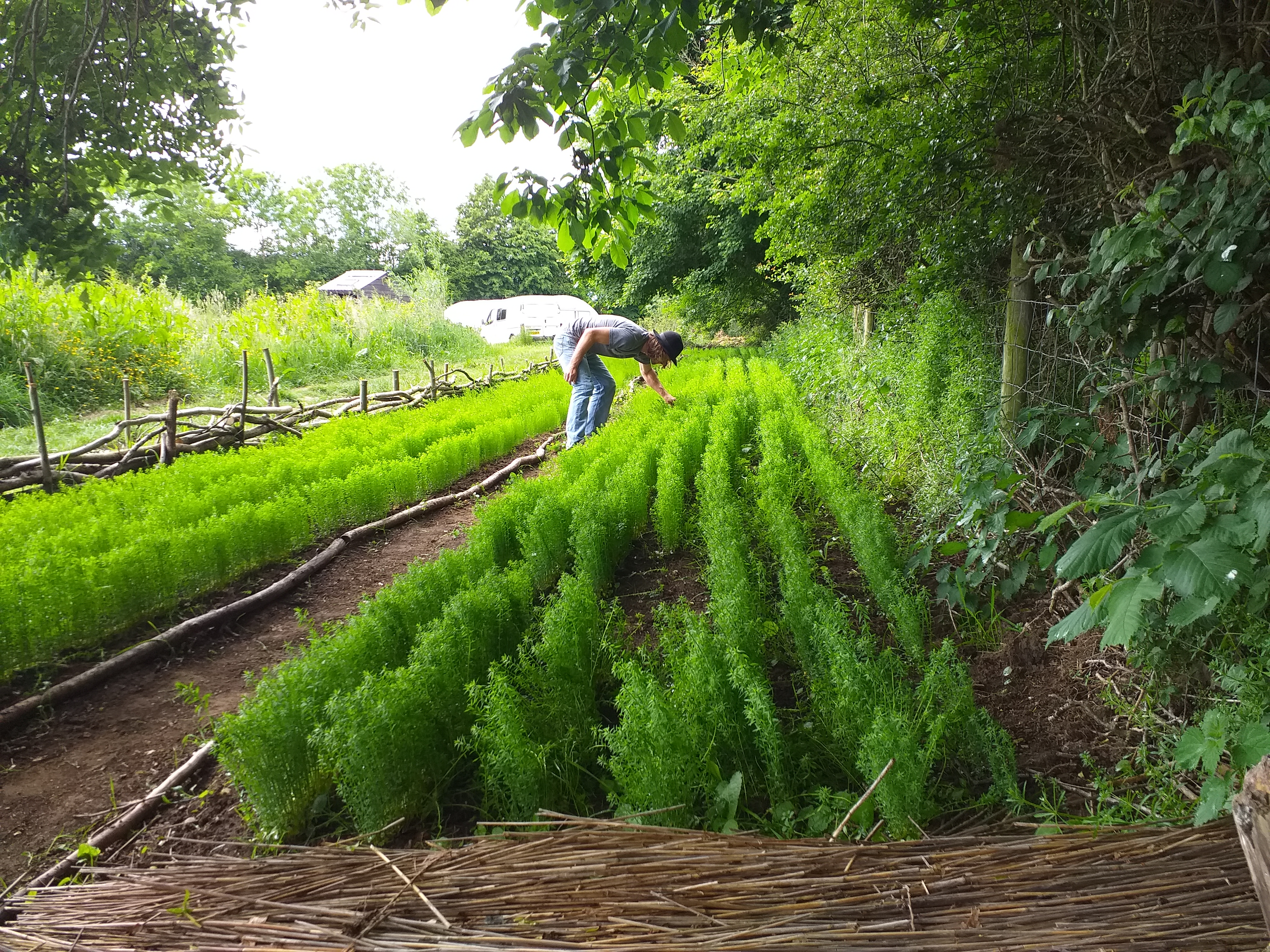
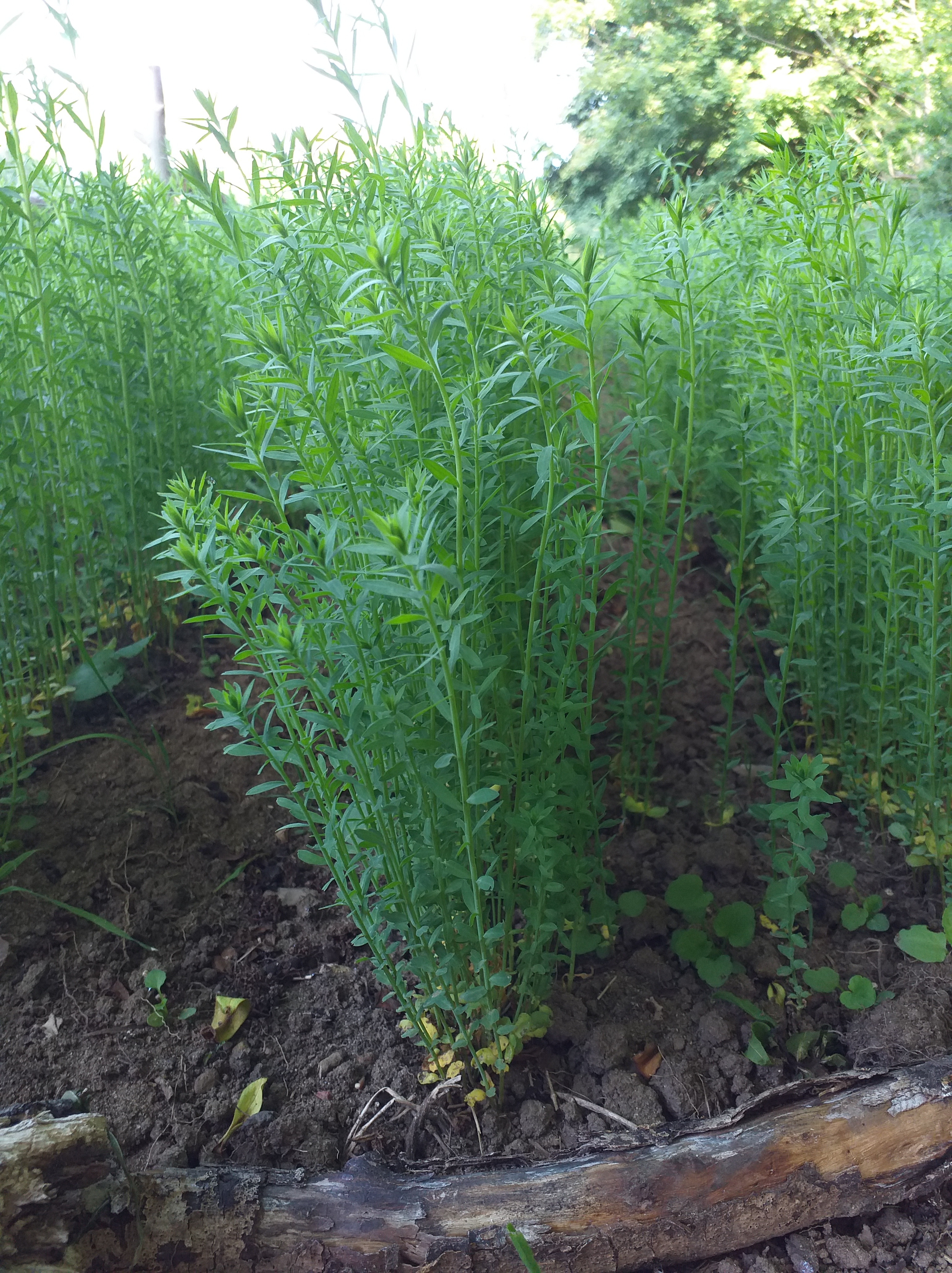
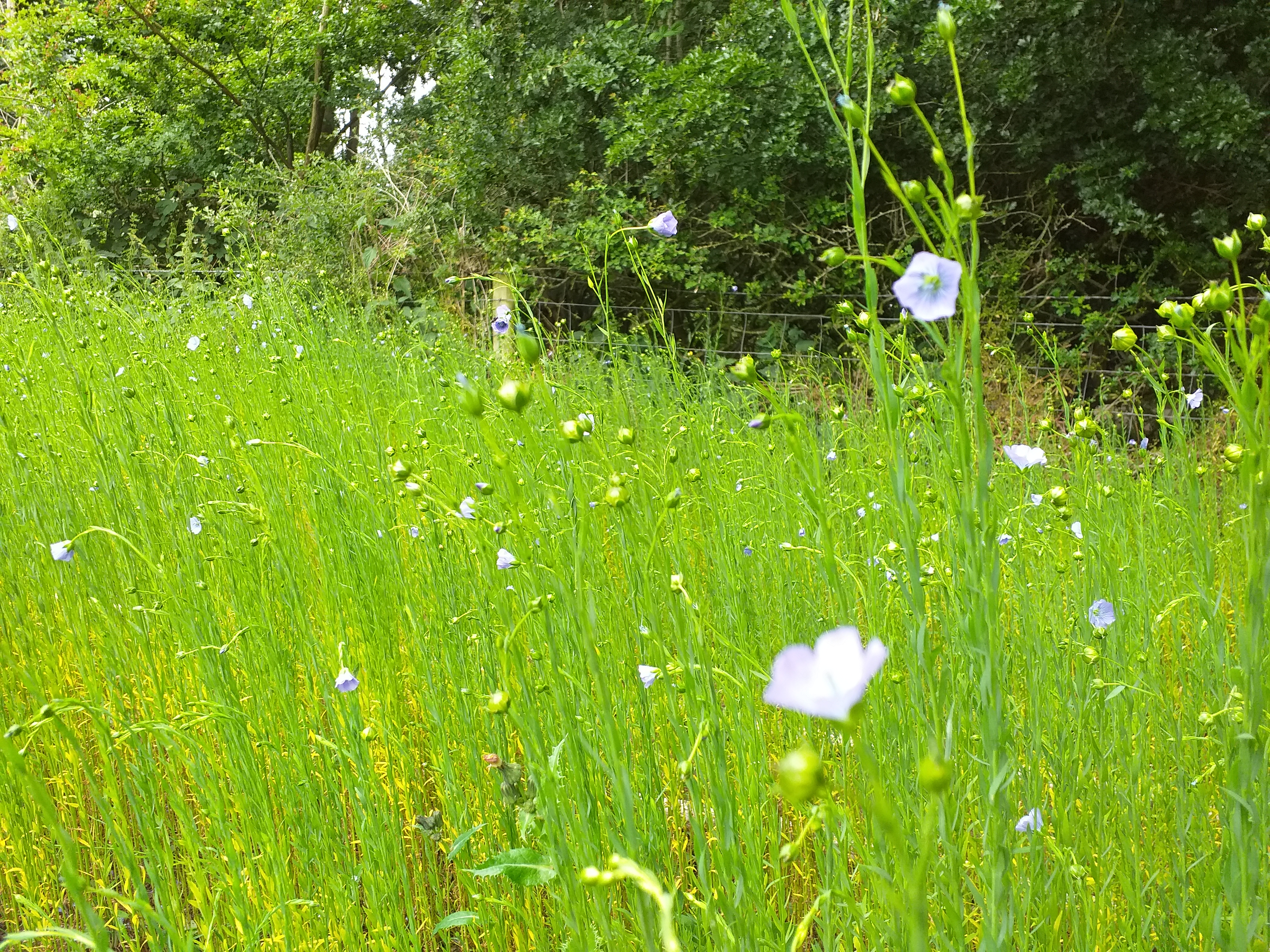
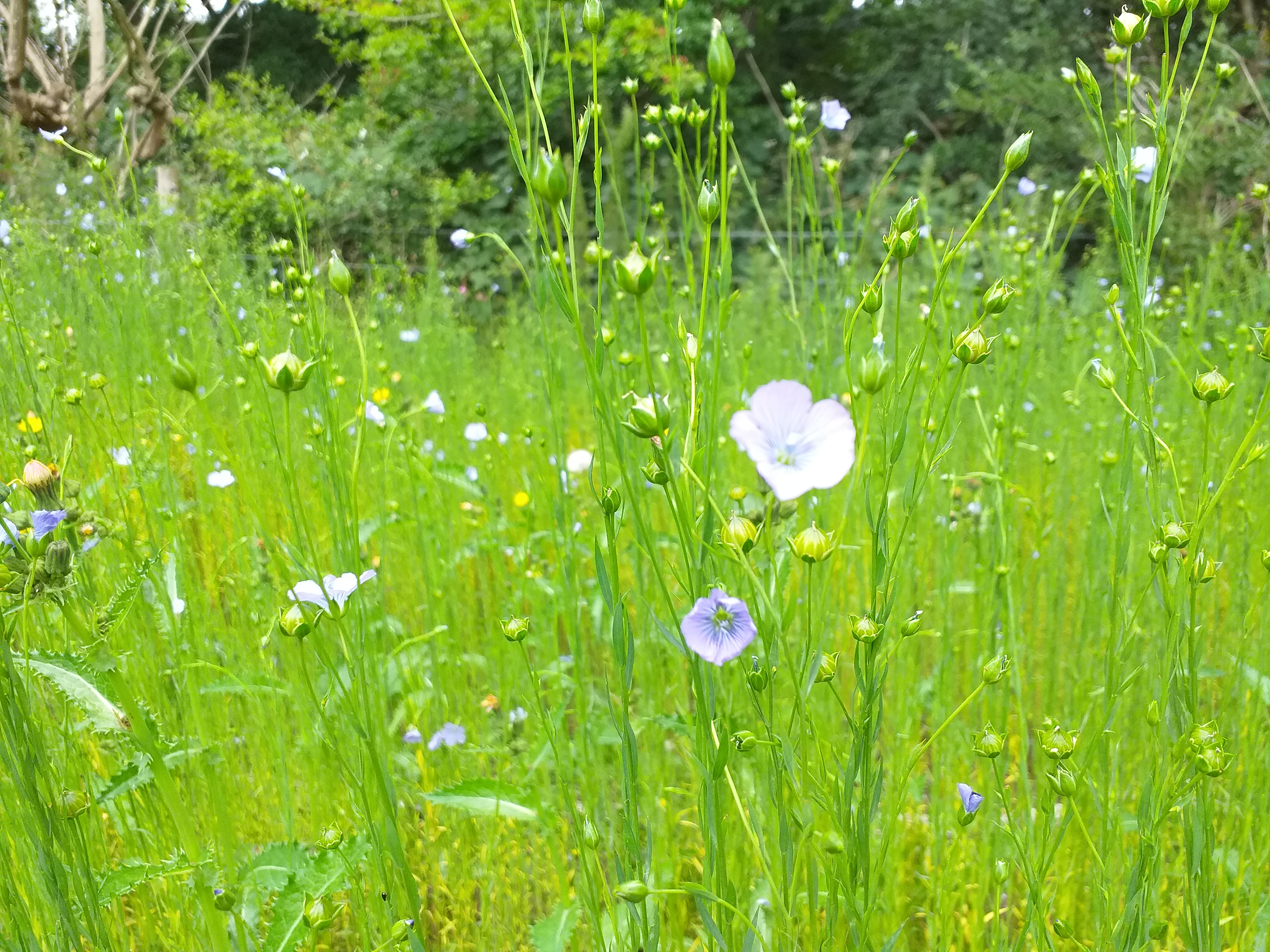
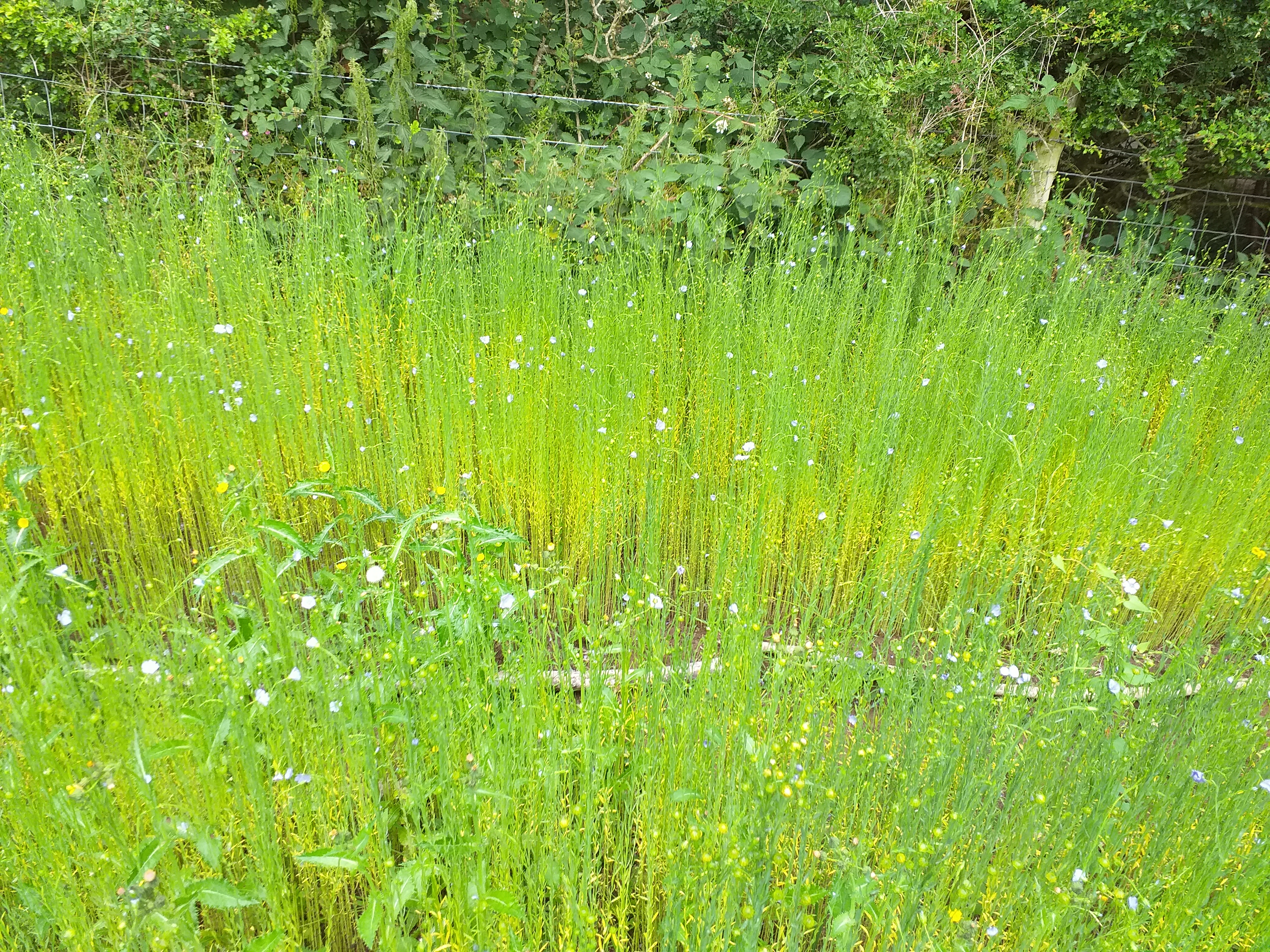
Below is a gallery of the flax’s growth progress, scroll down to read about how the flax was harvested.
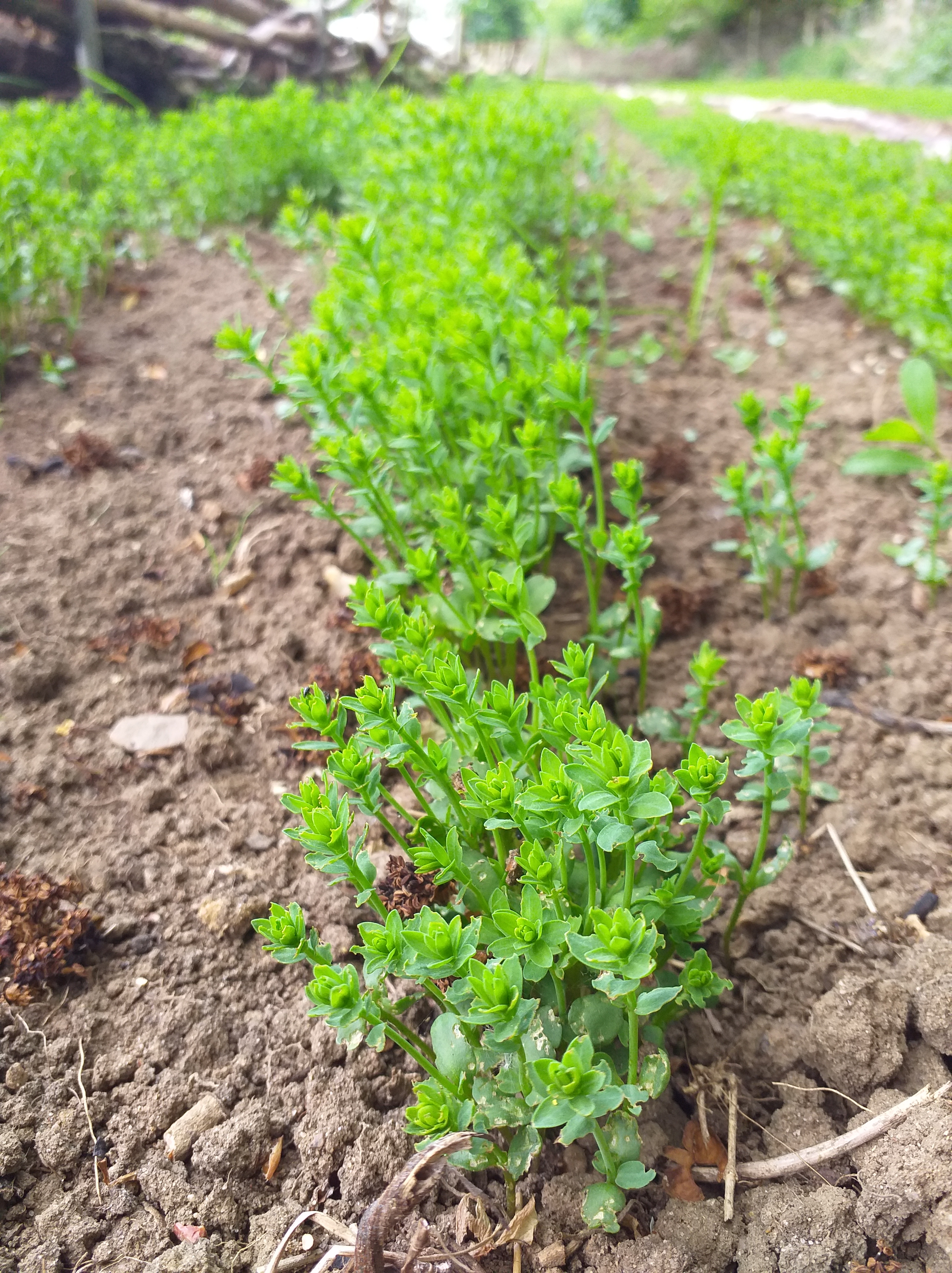
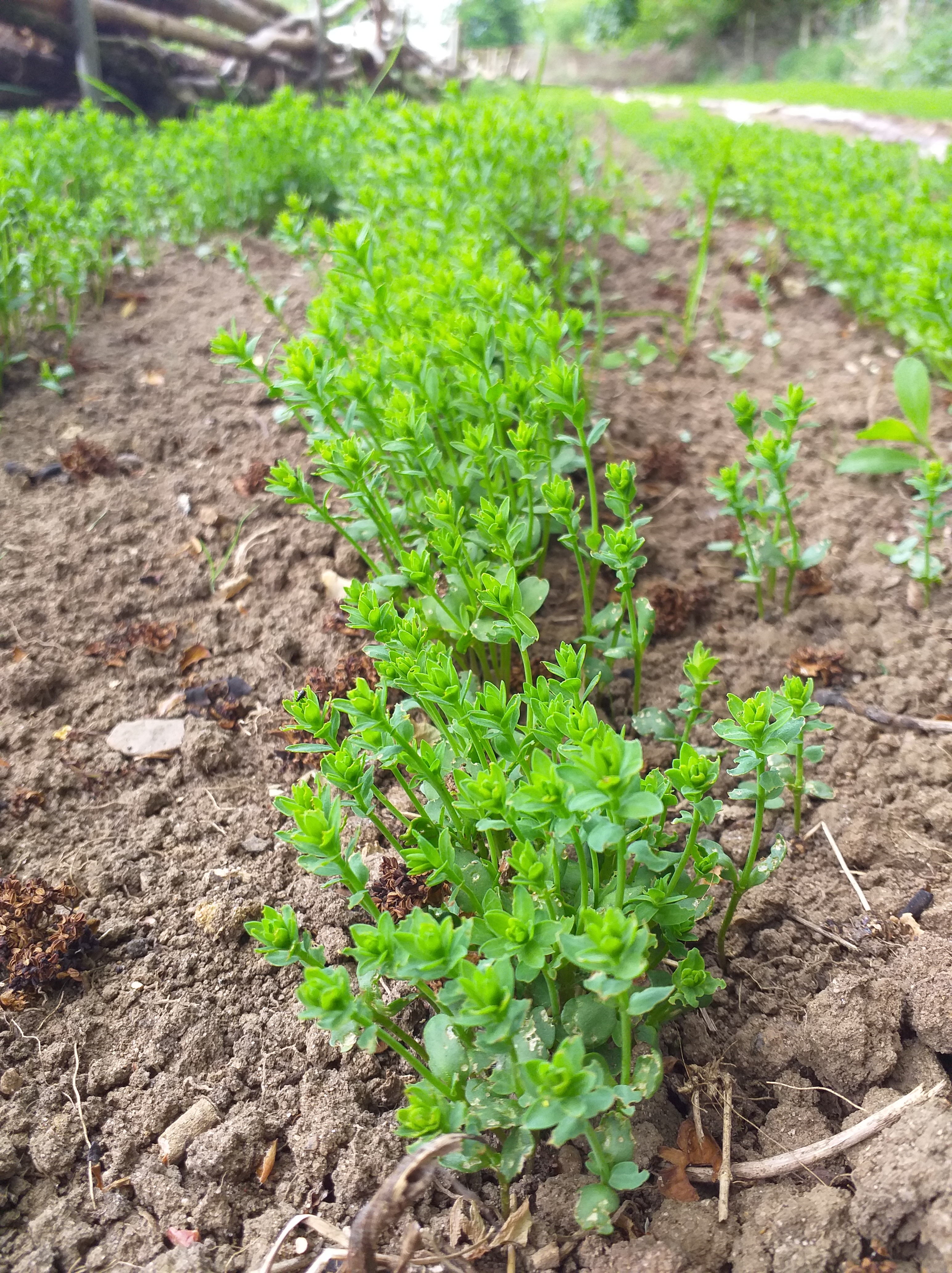
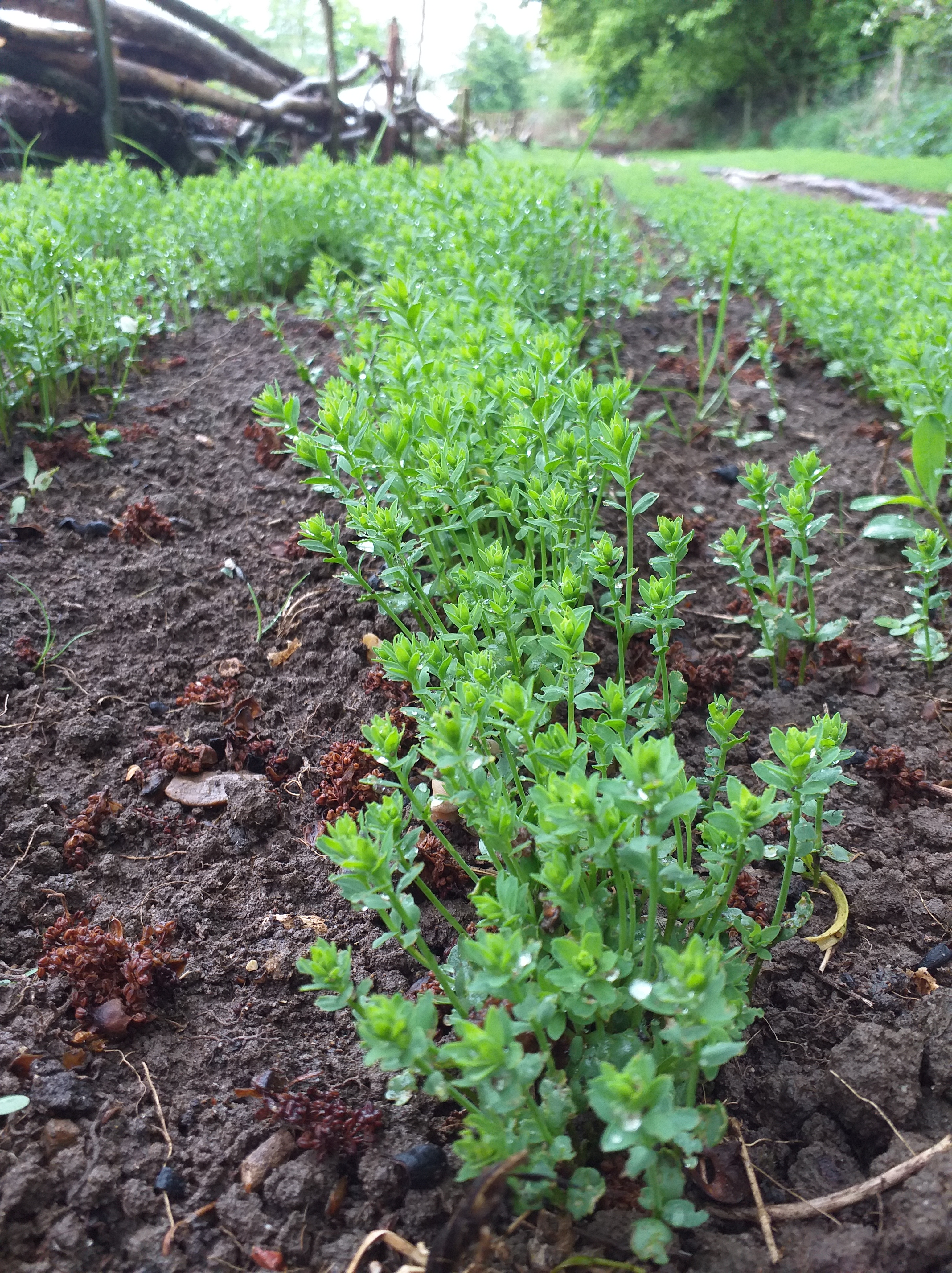
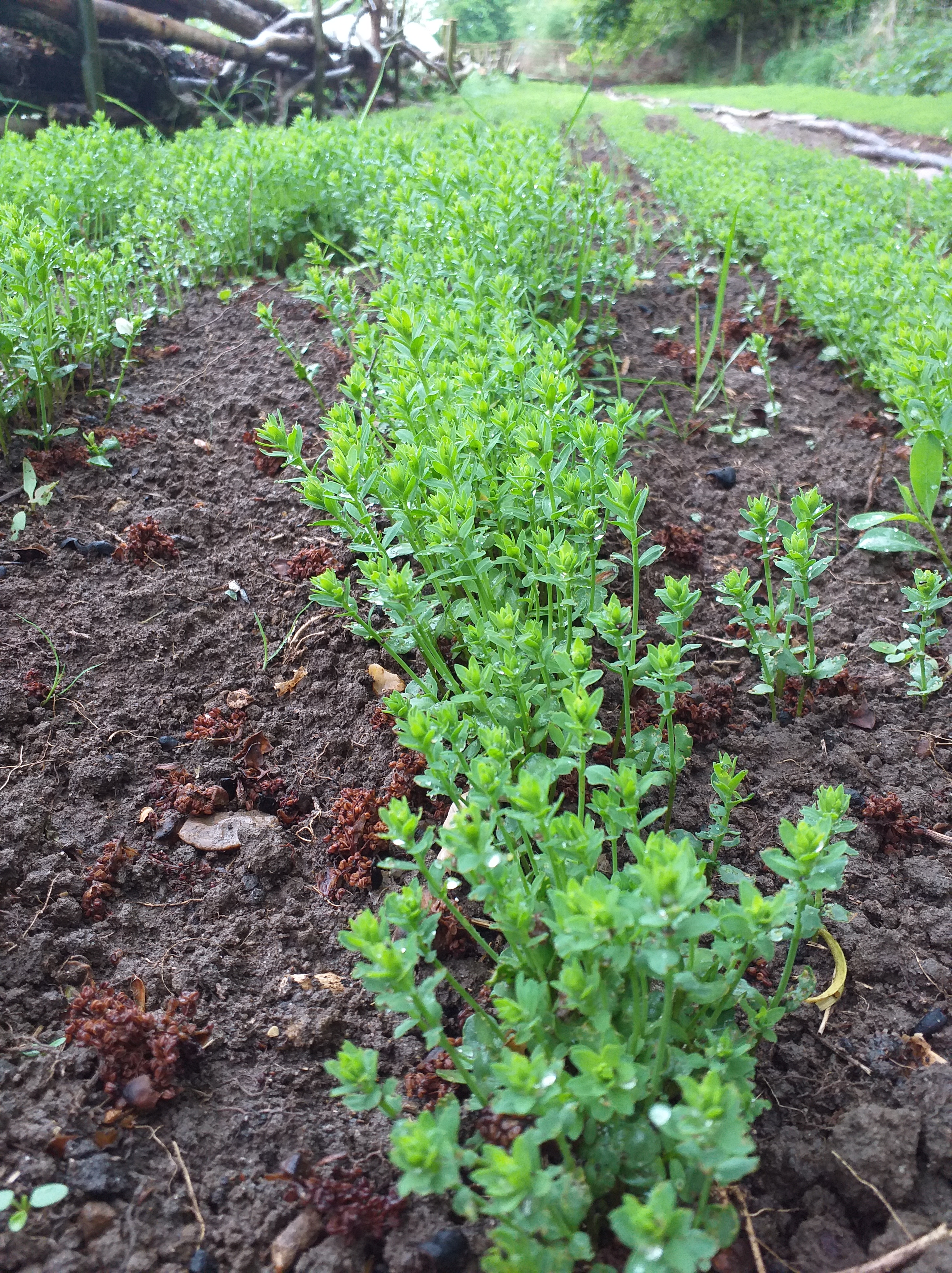

HARVEST
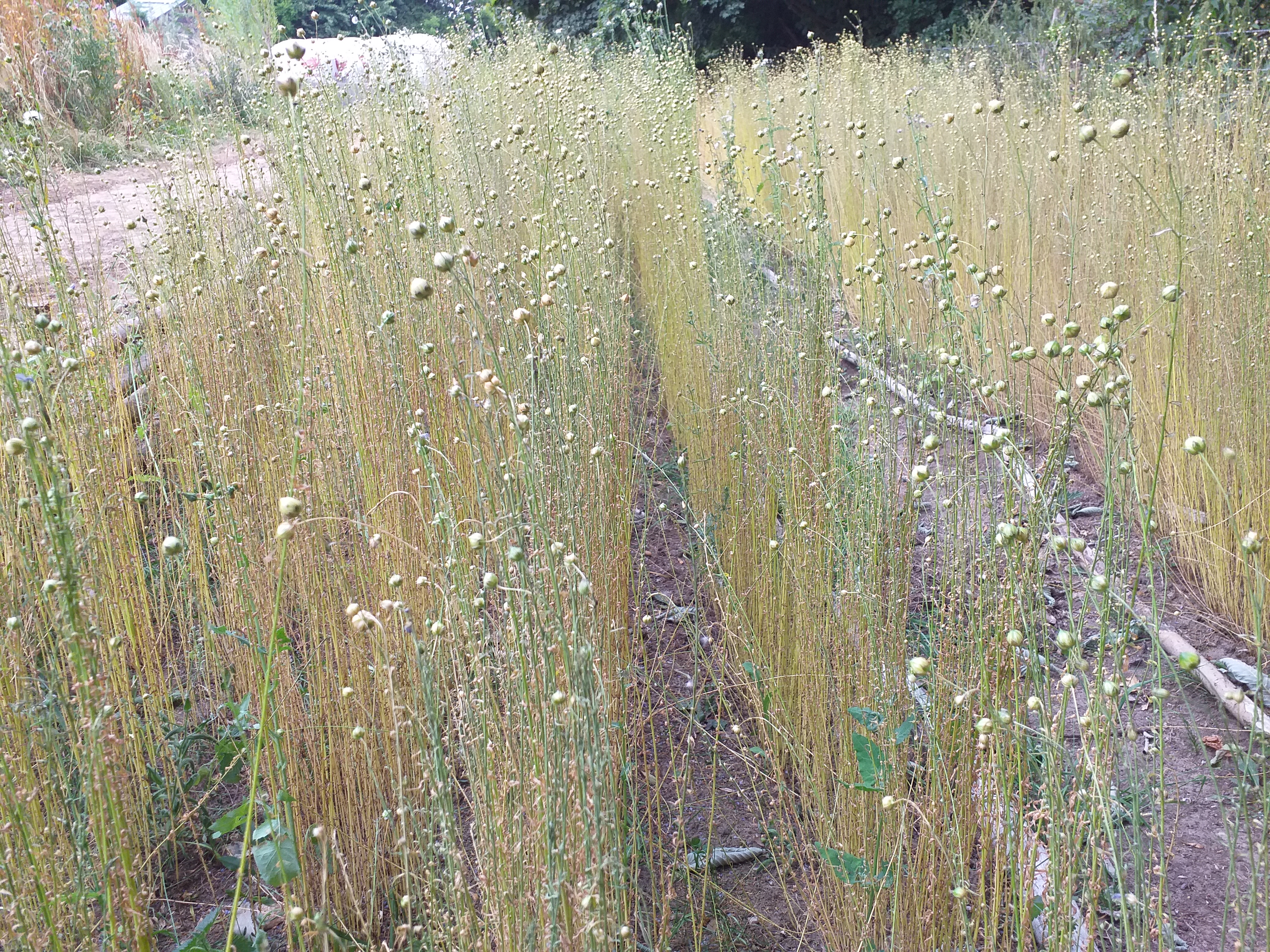
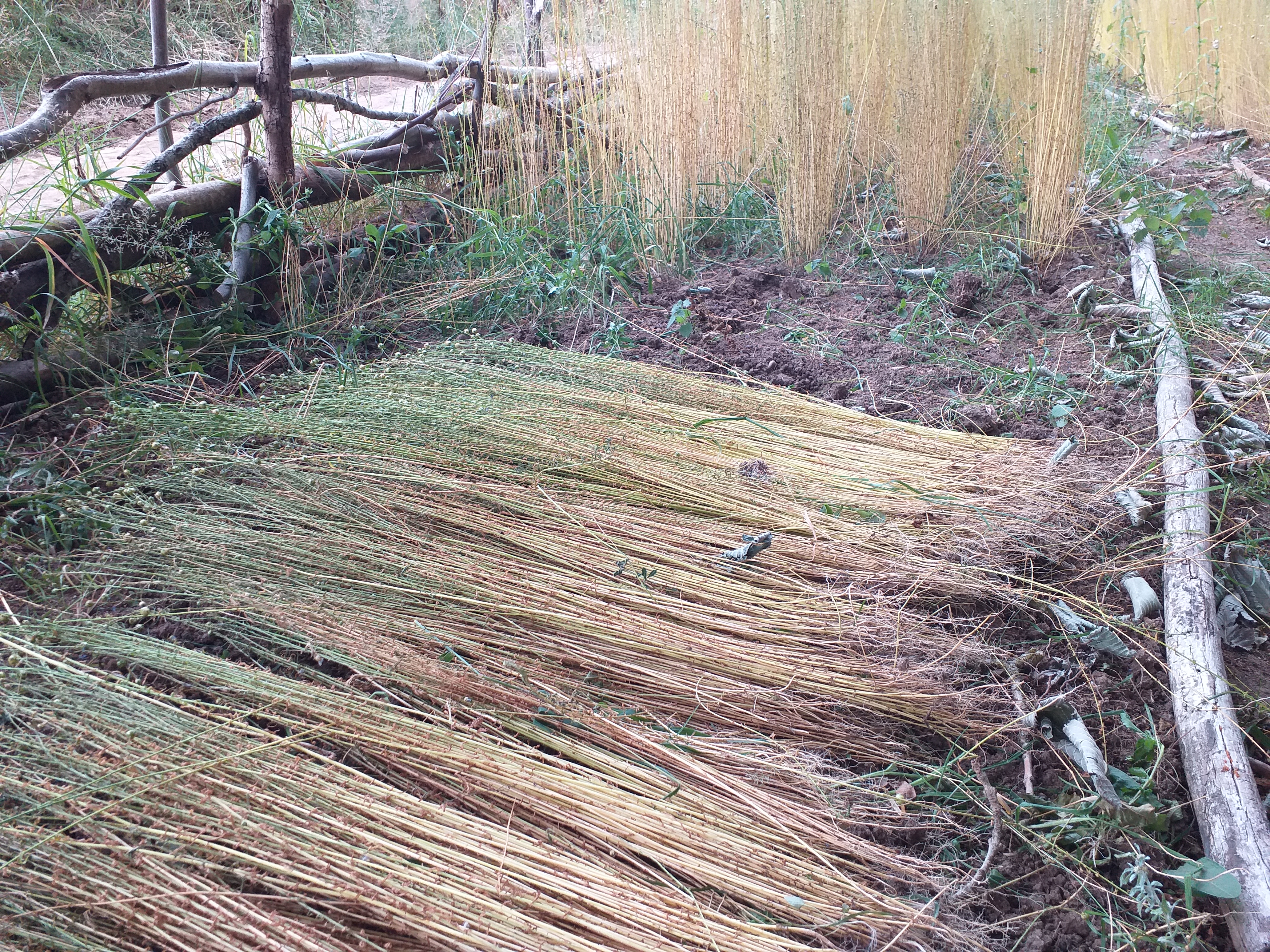
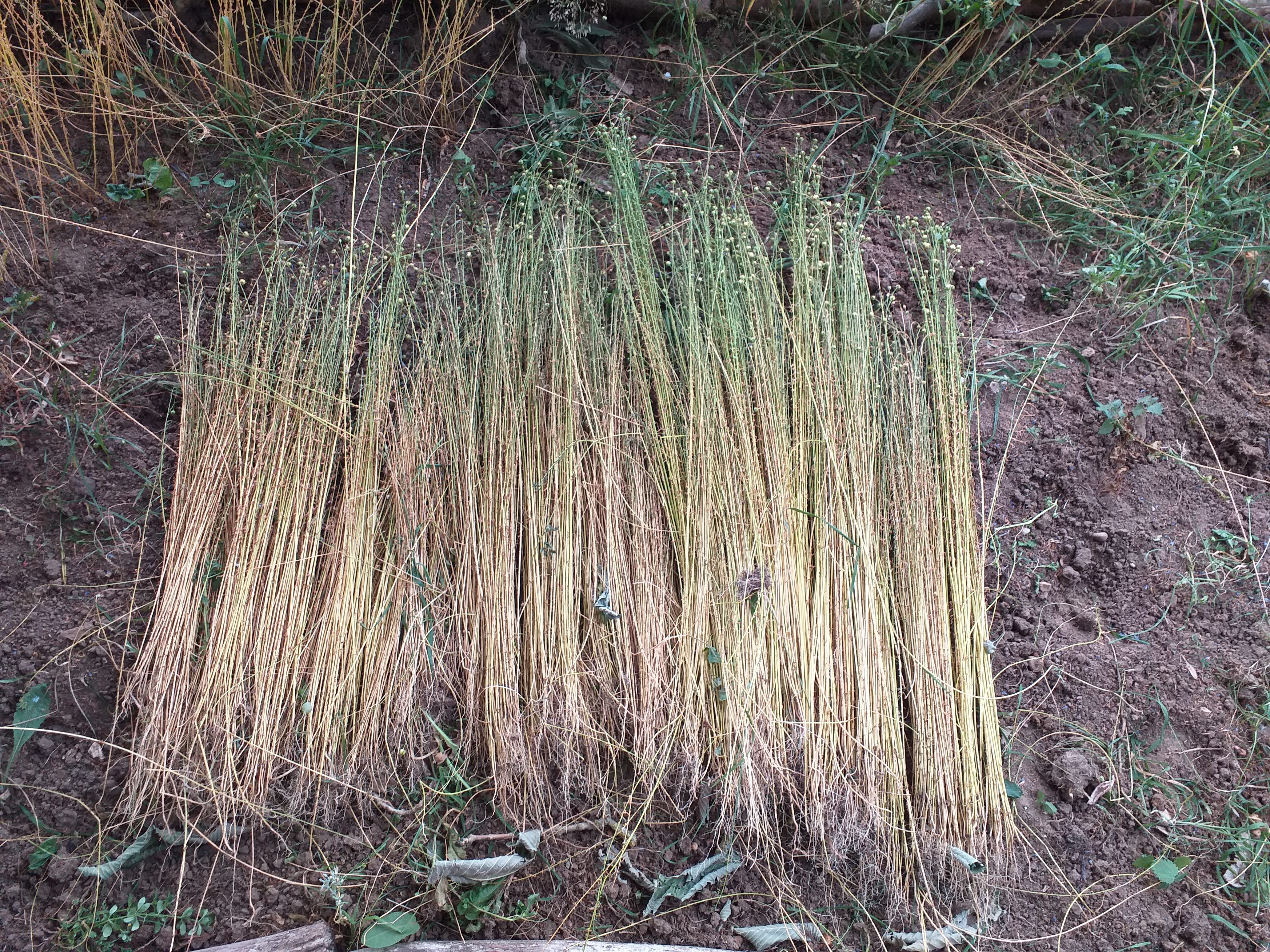
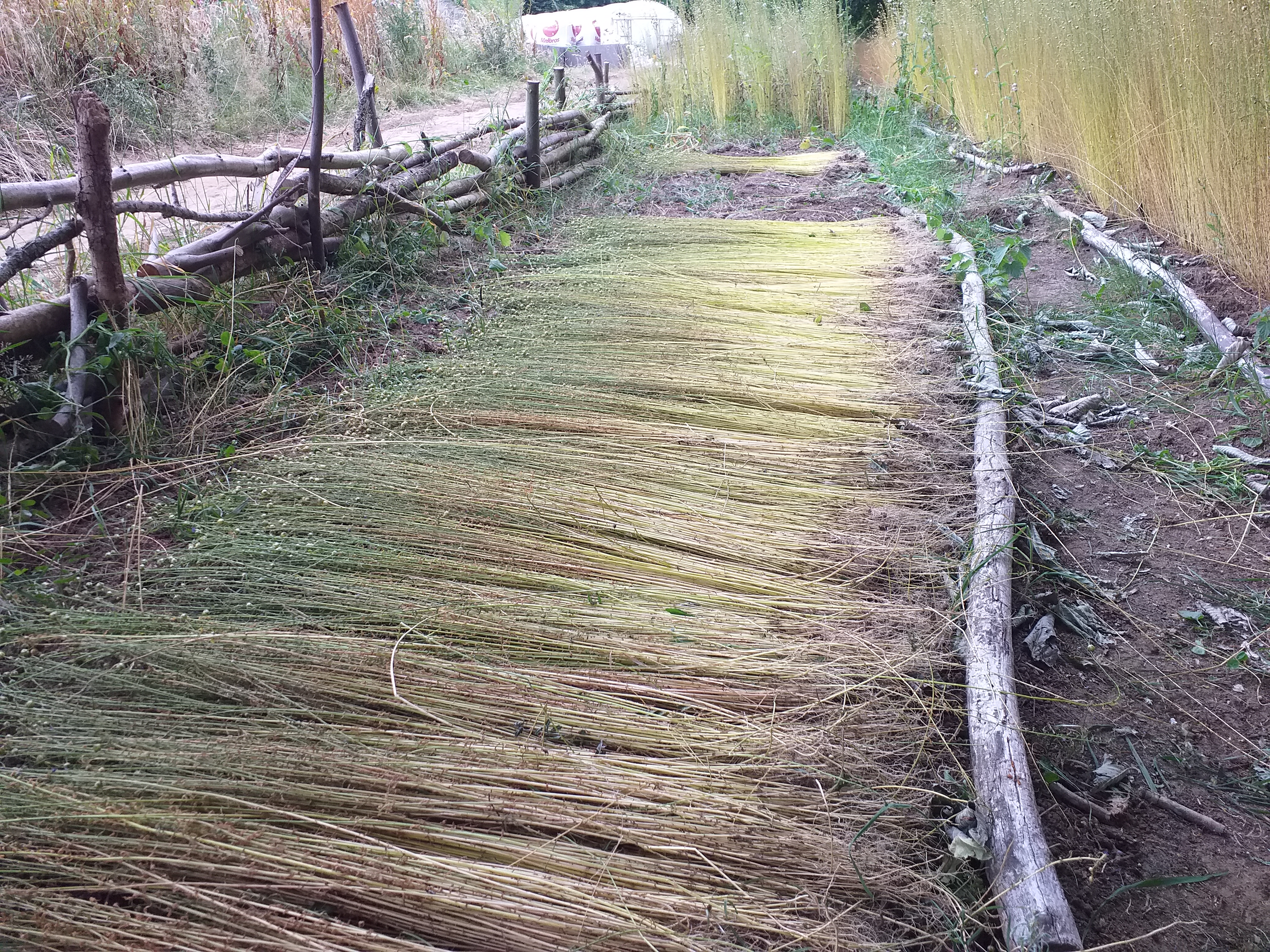
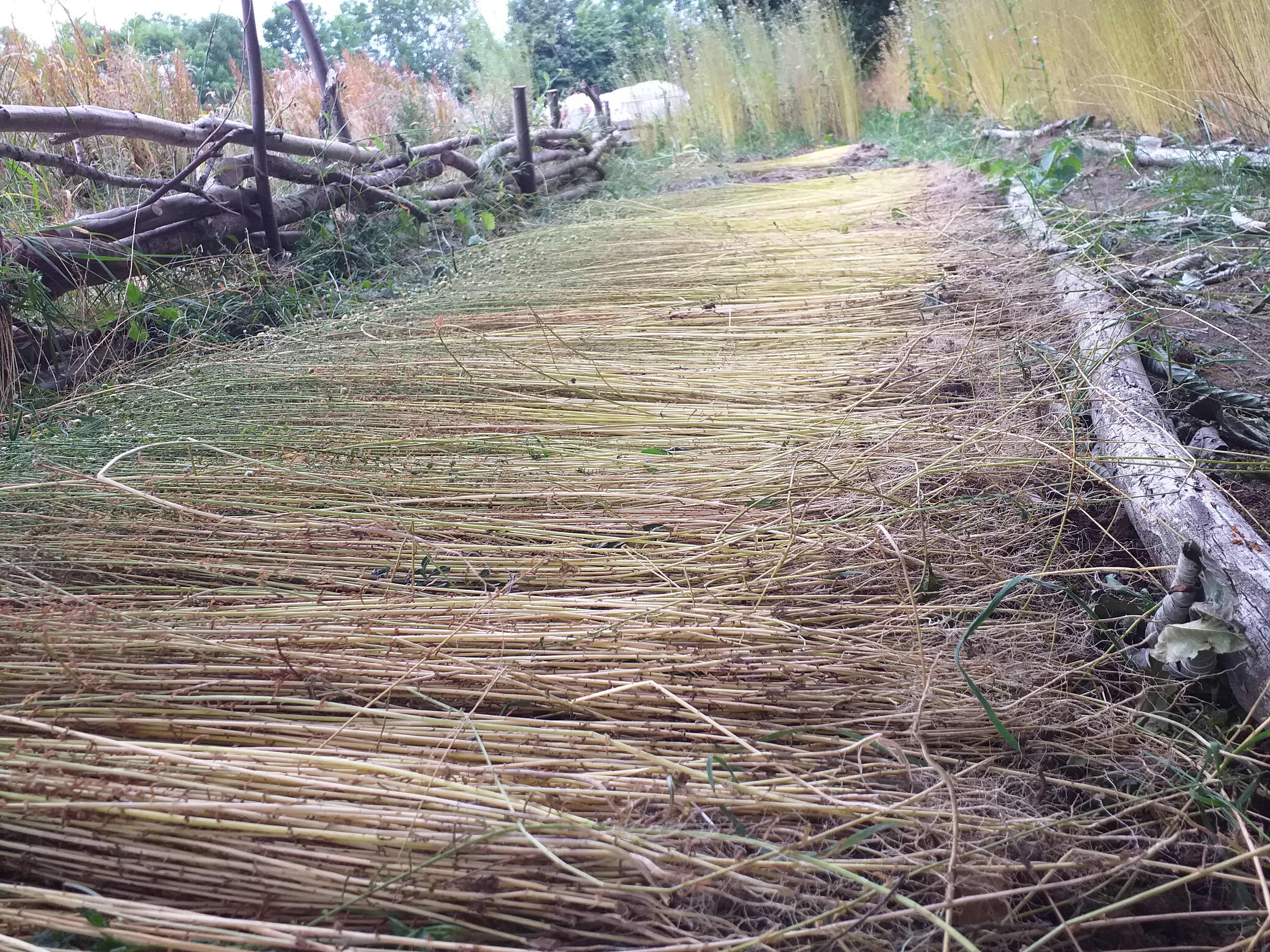
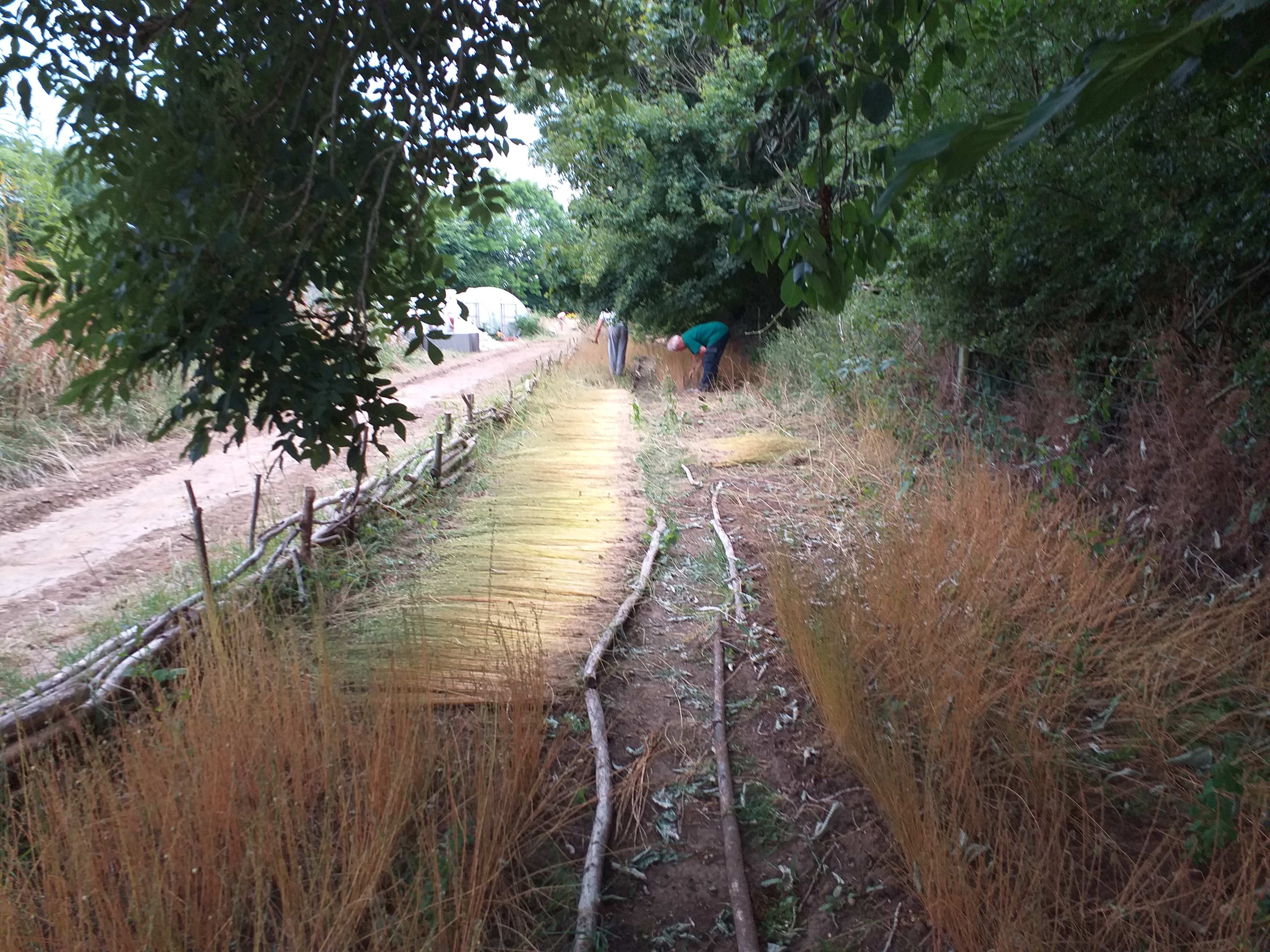
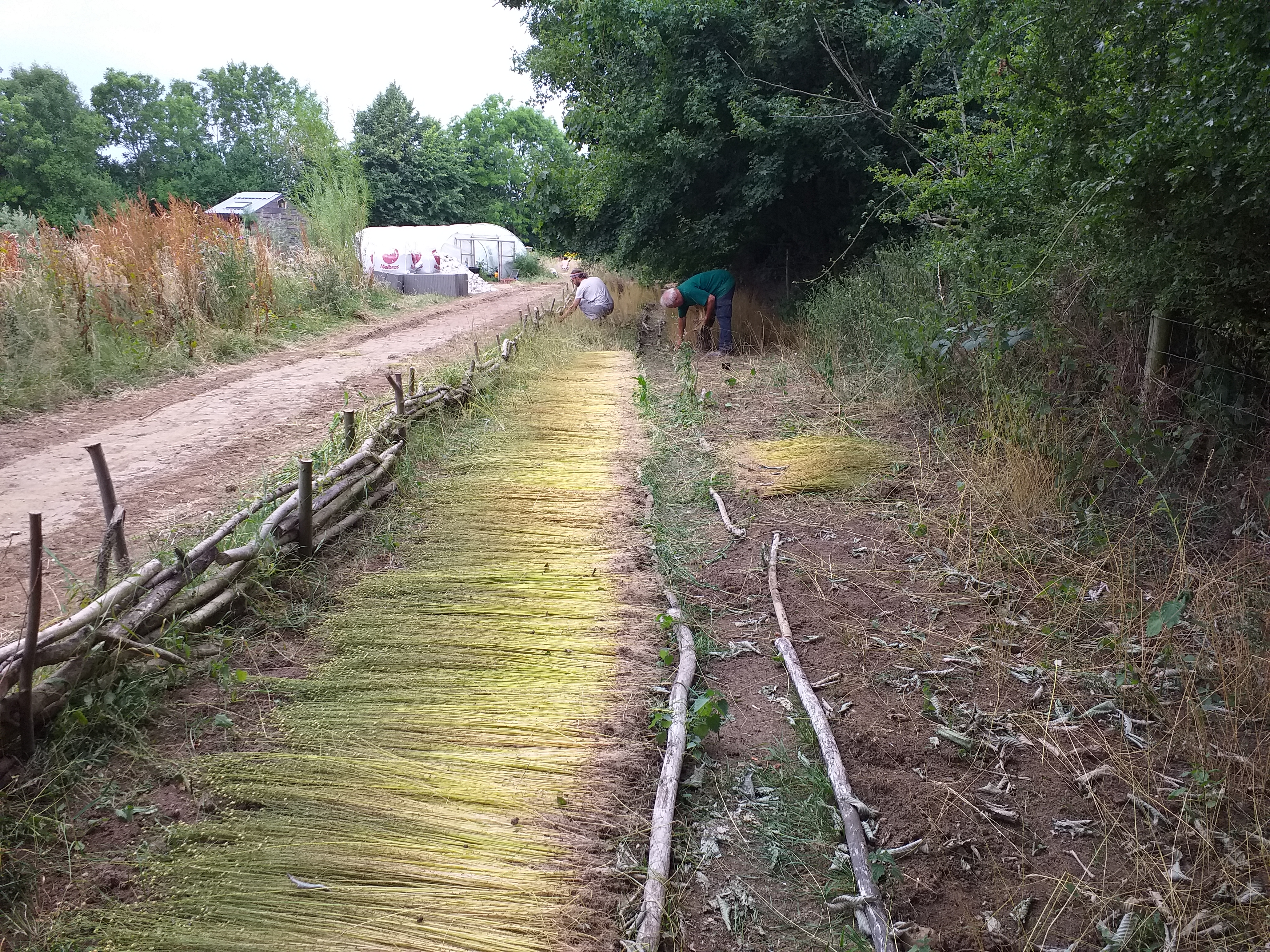
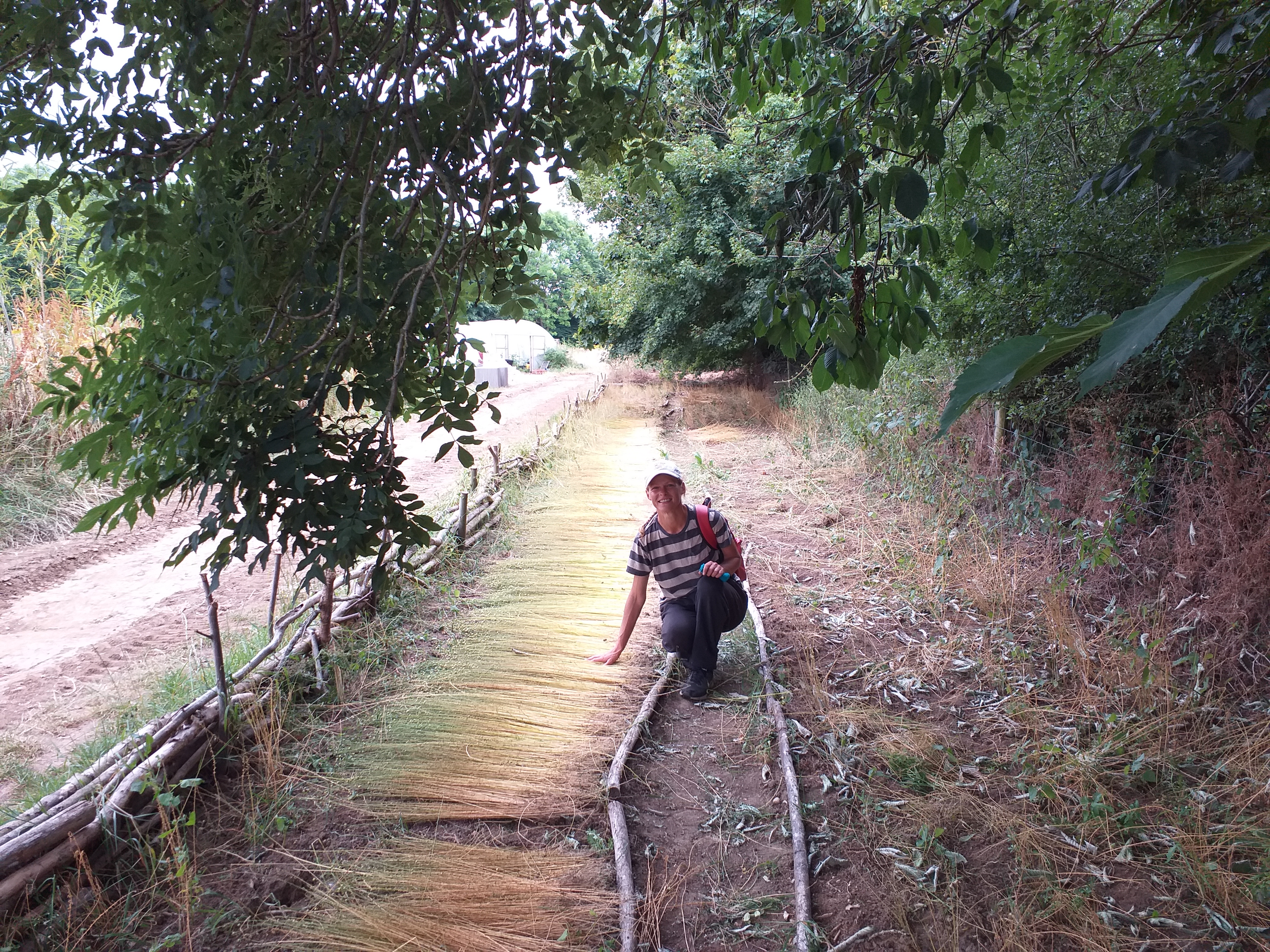
The flax was harvested on 21st July following a heatwave. The stems were 2/3 brown and yellow, with the top third of the plant still a little green. The flax was pulled keeping the roots intact and laid upon the soil where it was grown in piles approximately 50mm thick. This begins the retting process which in these dry conditions could take up to 2 months. Below are pictures of the pulling of the flax.
Overall observations, where there had been tree coverage the flax grew shorter. Damage from animals once the plants were well established was difficult to recover from. Weeding was impossible on the plants that were broadcast sown. It is recommended to sow drills as wide as you can comfortably fit a hoe between. The longest stems occurred in the row-sown drills. Some weeding can be done during harvest with weeds being extracted below laying the flax down.
PROCESSING BEGINS
At the first of our monthly Flint + Flax events on Saturday 3rd September the retted flax was checked. Each stem had a mottled greyish mould all the way around. The flax was retted during a hot period and so was watered manually twice and was turned 3 times during the full retting period. The final check to see if retting is complete is done by breaking the stem gently and seeing how easily the fibres fell away. In this case, the woody parts were still a little difficult to break, but the lovely silky fibres revealed themselves so I decided to start processing some whilst leaving the majority to ret a little longer. I will continue to do this until the flax is perfectly retted (the straw flakes easily from the fibres), at which point it will be stacked in bushels to stay dry. Once the retted flax is dried, it can be stored indefinitely until you are ready to process it. I had been very worried about this part of the process having read that over and under-retting each causes problems with the quality of the final flax fibres, and so was relieved to see the process had so far worked!
Check bak to this page soon to read about our 2024 flax growing season, we will be sowing the seeds around 19th April.
 The Prehistoric Workshop