
Hafting in the processes of attaching a stone or metal tool to a handle or strap. Wood, bone and leather are commonly used. When archaeologists find ancient stone and metal tools such as axeheads, or weapons such as spear/arrowheads, often the haft has decomposed leaving no trace. Our research looks at the different approaches to the process of hafting.
Our Hafting project was initiated by The Field Detectives a group of historians who have lent us a Neolithic polished axehead, a stone mace head, and a stone spindle whorl to experiment with different hafting techniques and materials. We thank them, and were so excited we got started straight away. Scroll down to see the spindle whorl hafting experiment.
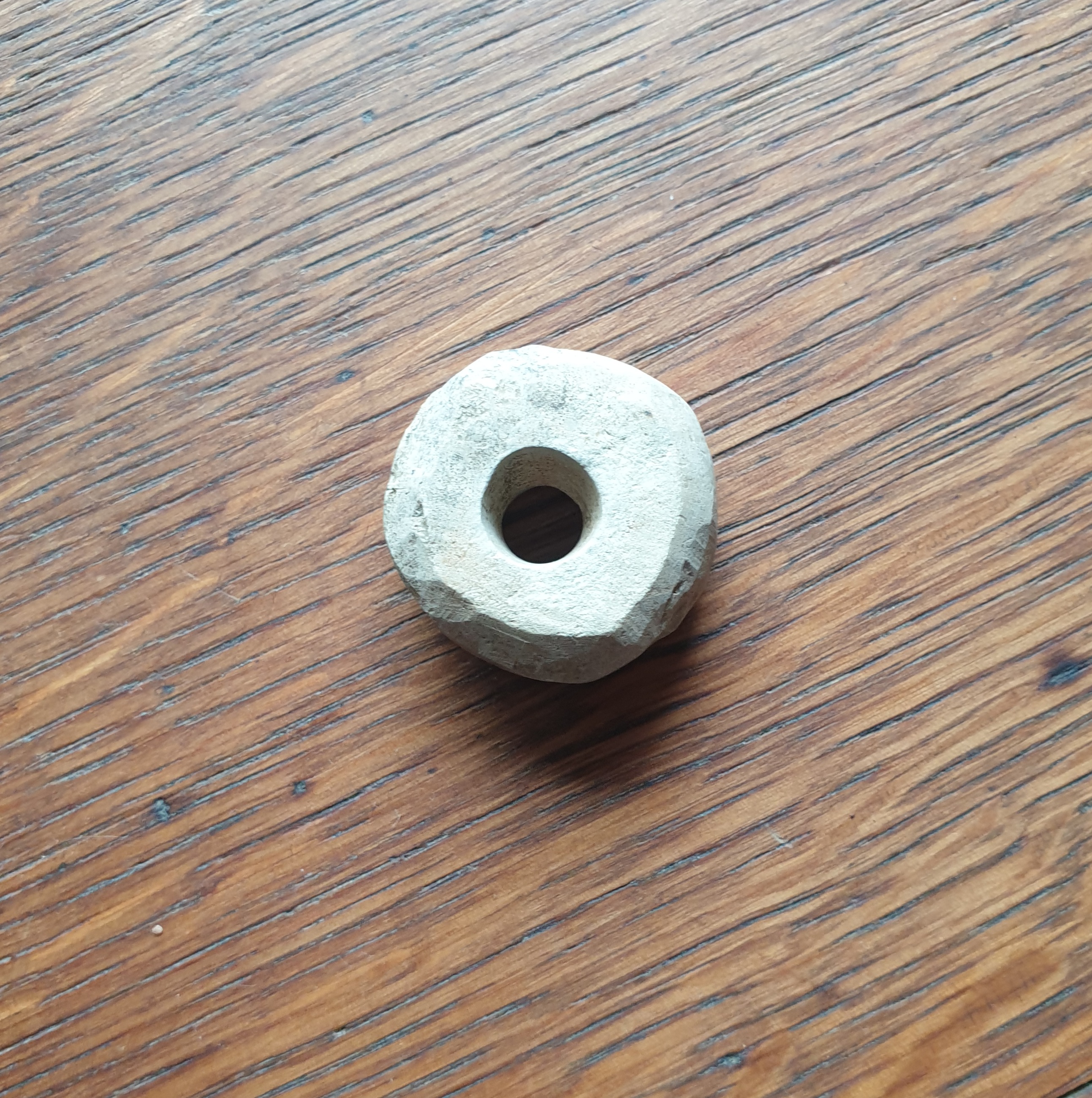
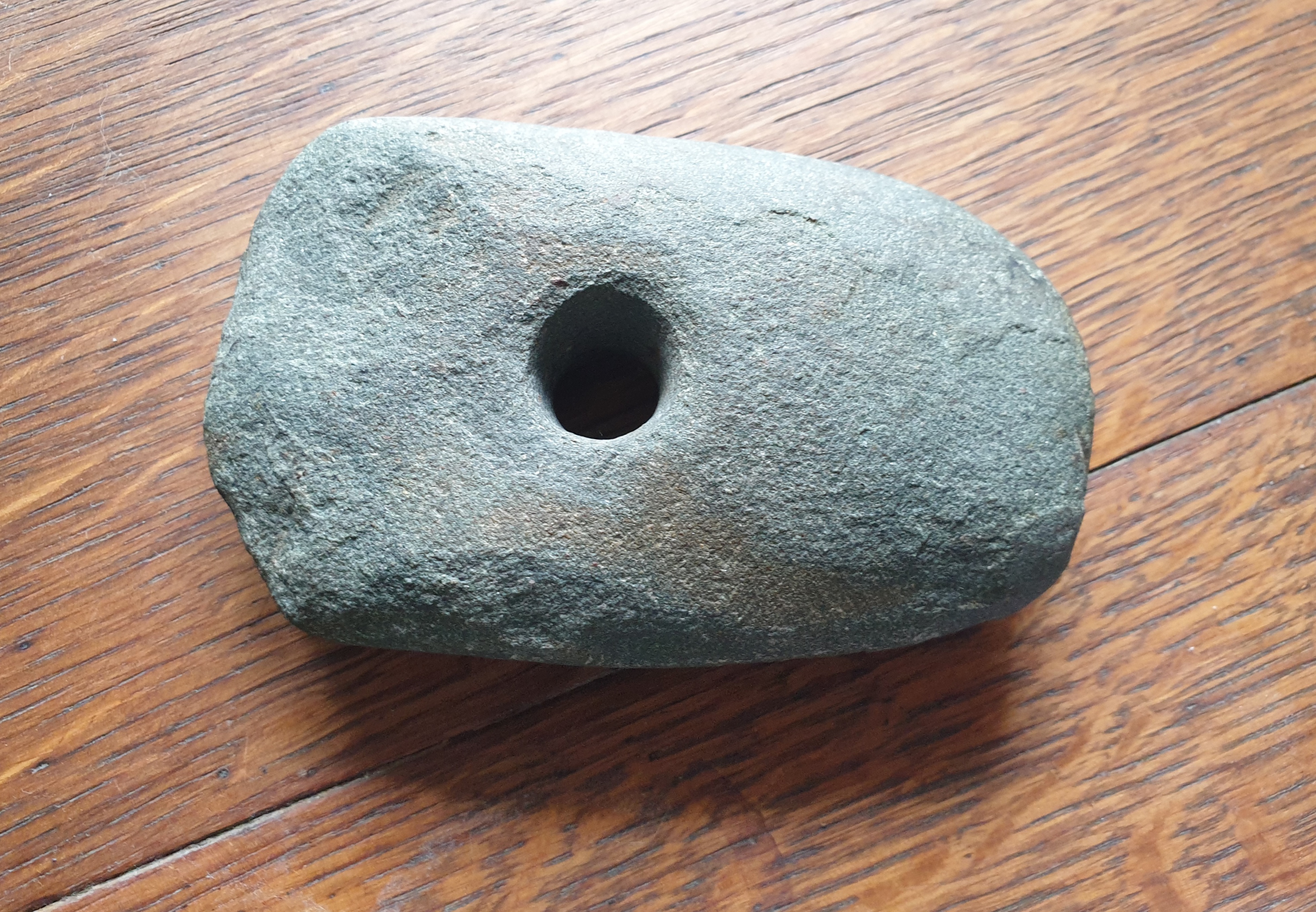
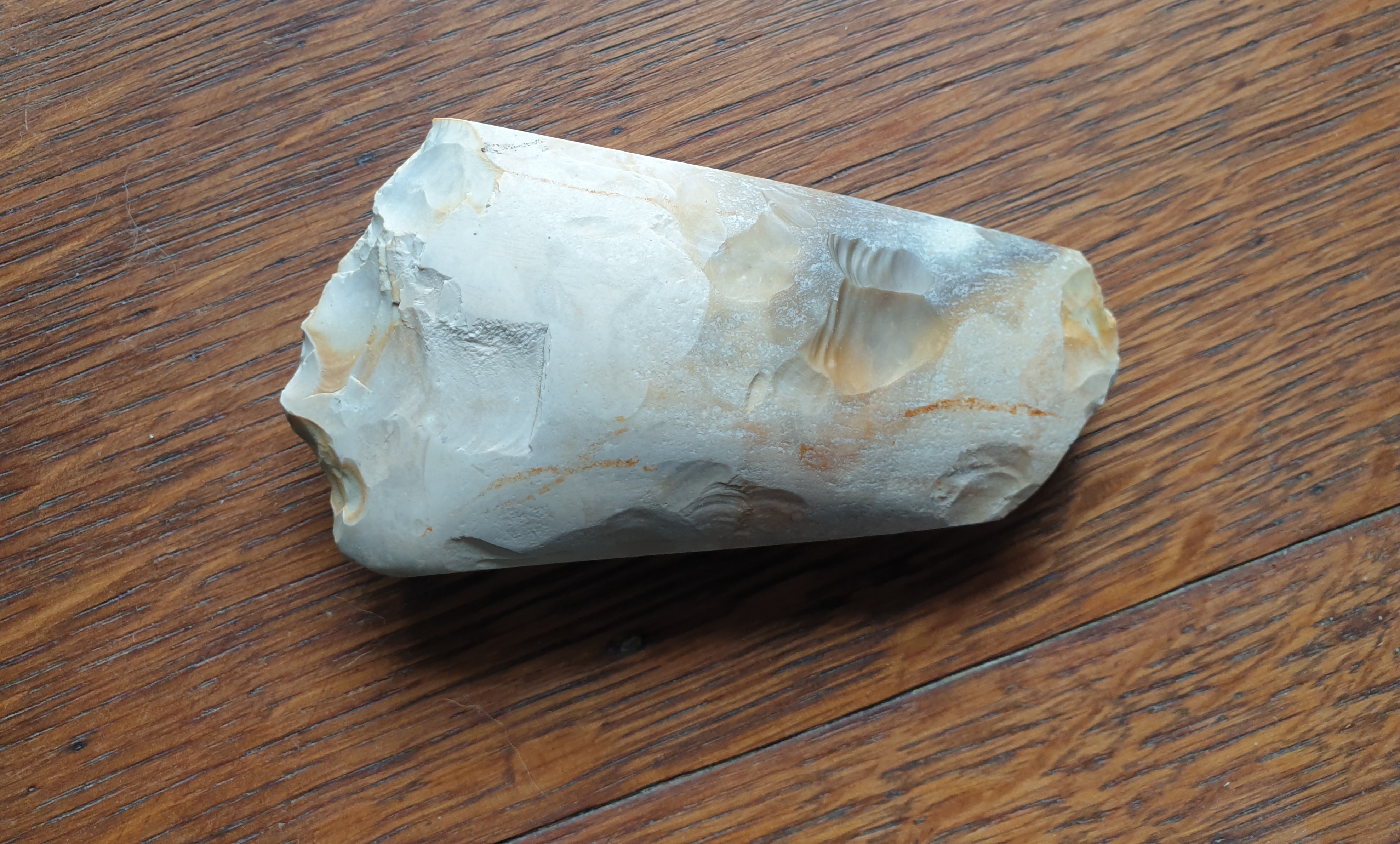
The hafting project more broadly, will continue in May when a group of researchers from The University of Leicester undertake a day of experiments hafting some of Neil’s flint replicas.
Hafting a stone spindle whorl
I used a thin piece of cherry wood harvested last year, 3 different flint tools, and some sandstone to work the wood. Below you see the beautiful denticulated knife Neil made. It worked very well at ‘scoring’ around the entire stick before a controlled snap did the rest of the job.
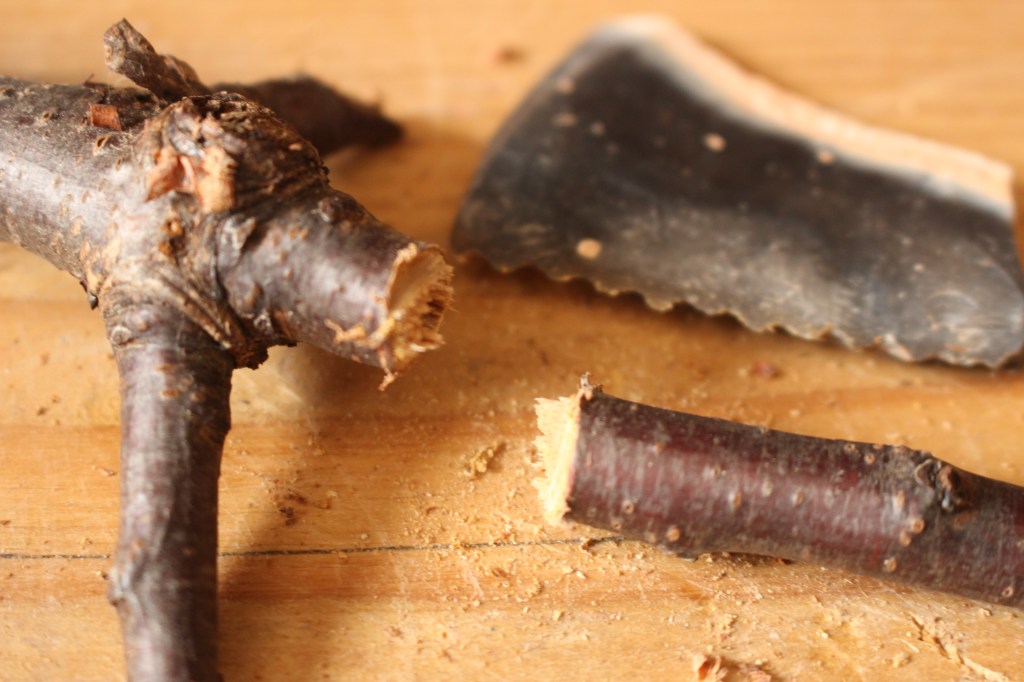
I then used a very crude homemade flint knife to shave the eyes off the stick, and smooth any big lumps. You can see that below.
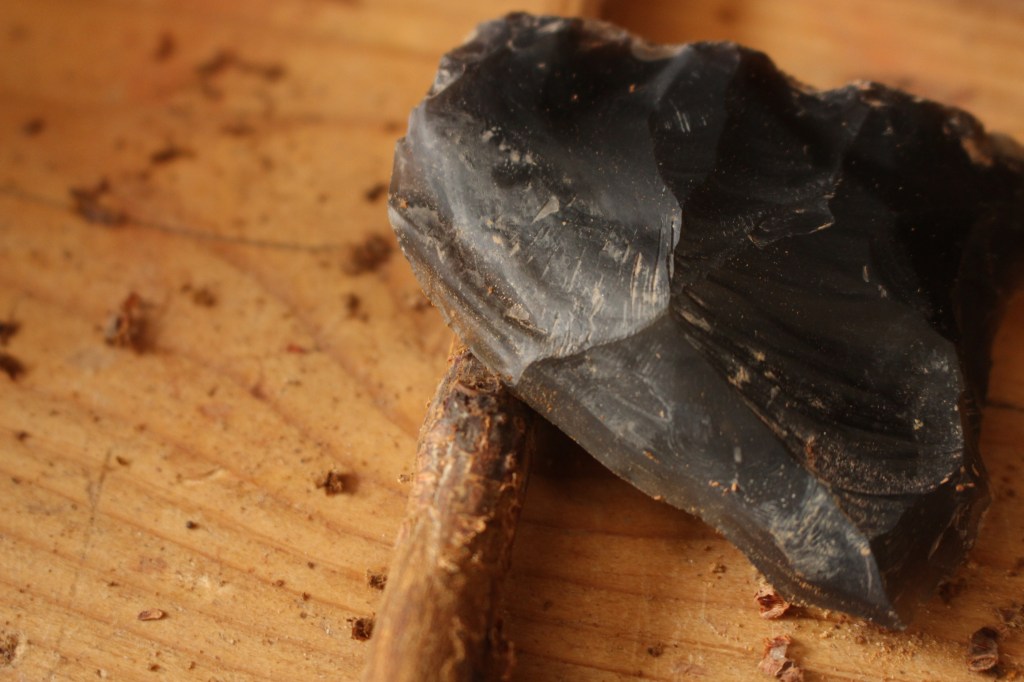
Until finally turning to the side-notched scraper, which was very effective at removing the bark, it left a surprisingly smooth surface that wouldn’t require too much sanding.

At this stage I scrape until the end is tapered enough to hold the spindle. Keep checking as you scrape away, you can always scrape more but you can’t add it back on! I found the best technique with the tools was to hold the wood at the top pushing it away from you and with the bottom firmly on a surface, and with your tool in the stronger hand work down the shaft towards your body.
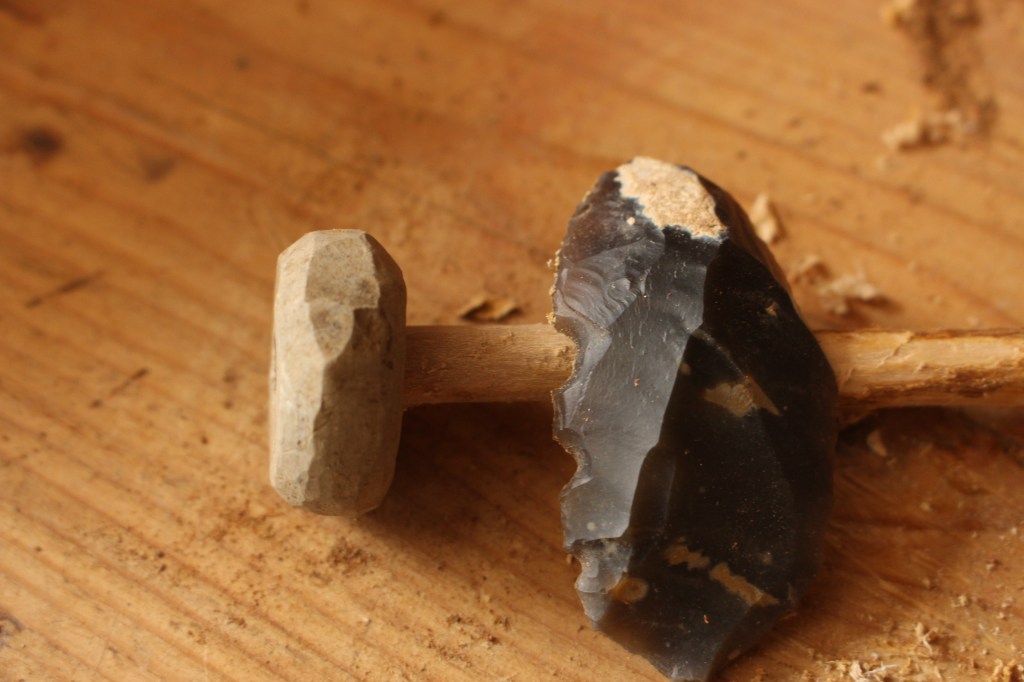
After approximately an hour and a half, the wood is fit for the job, although my thumbs aren’t. The tools are satisfying to use, but the constant gripping of both the wood and tool requires resting the hands at intervals to avoid pain. A small pile of nice fire tinder remains.

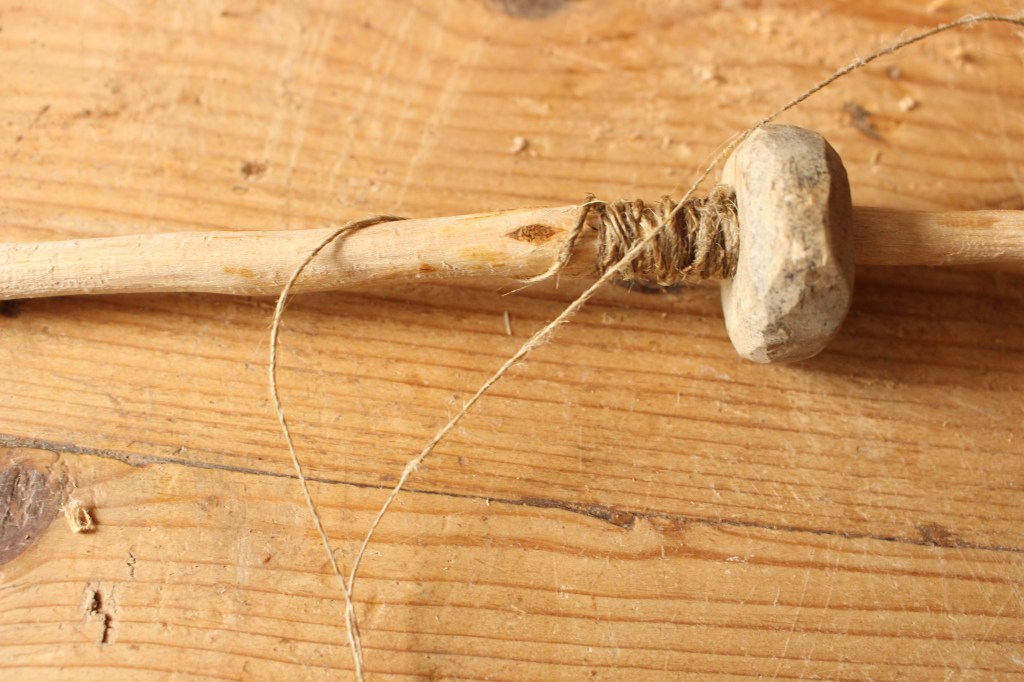
Now to find out if it is fit for purpose. There is no indication in the whorl stone design as to whether the whorl should sit at the top, or bottom of the spindle haft. I try both ways, with the whorl at the top being a much stabler experience. You can see in the image below the fineness of the resulting yarn.
I then decide to work on the haft again and refine the ends to taper to a point, hoping this might improve the aerodynamics. I used the denticulated knife to shave the ends, the scraper to clean up and shape, and finally I rubbed them on a piece of sandstone to soften the splinters. I will update the page very soon with how these modifications affected the overall spinning experience.
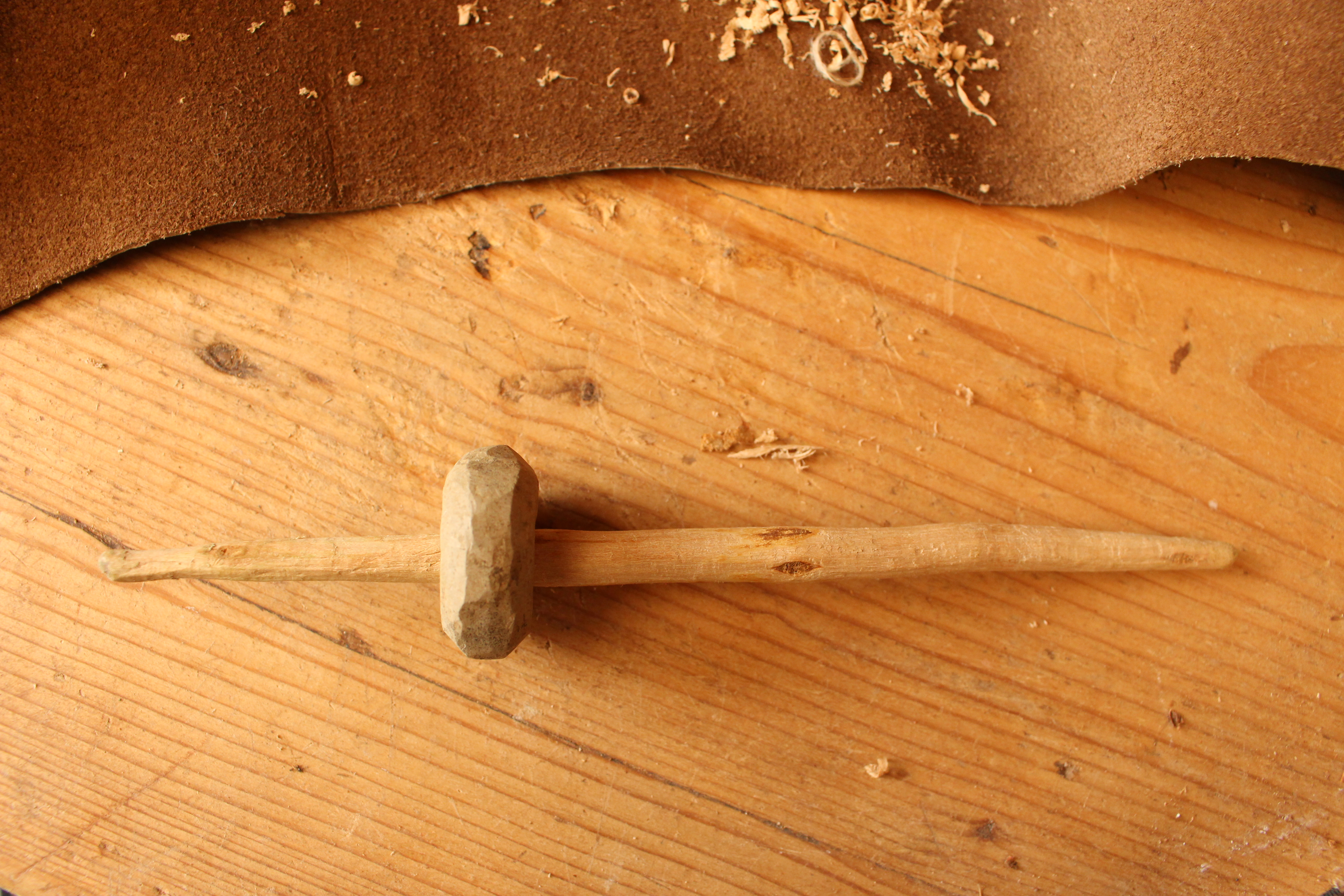
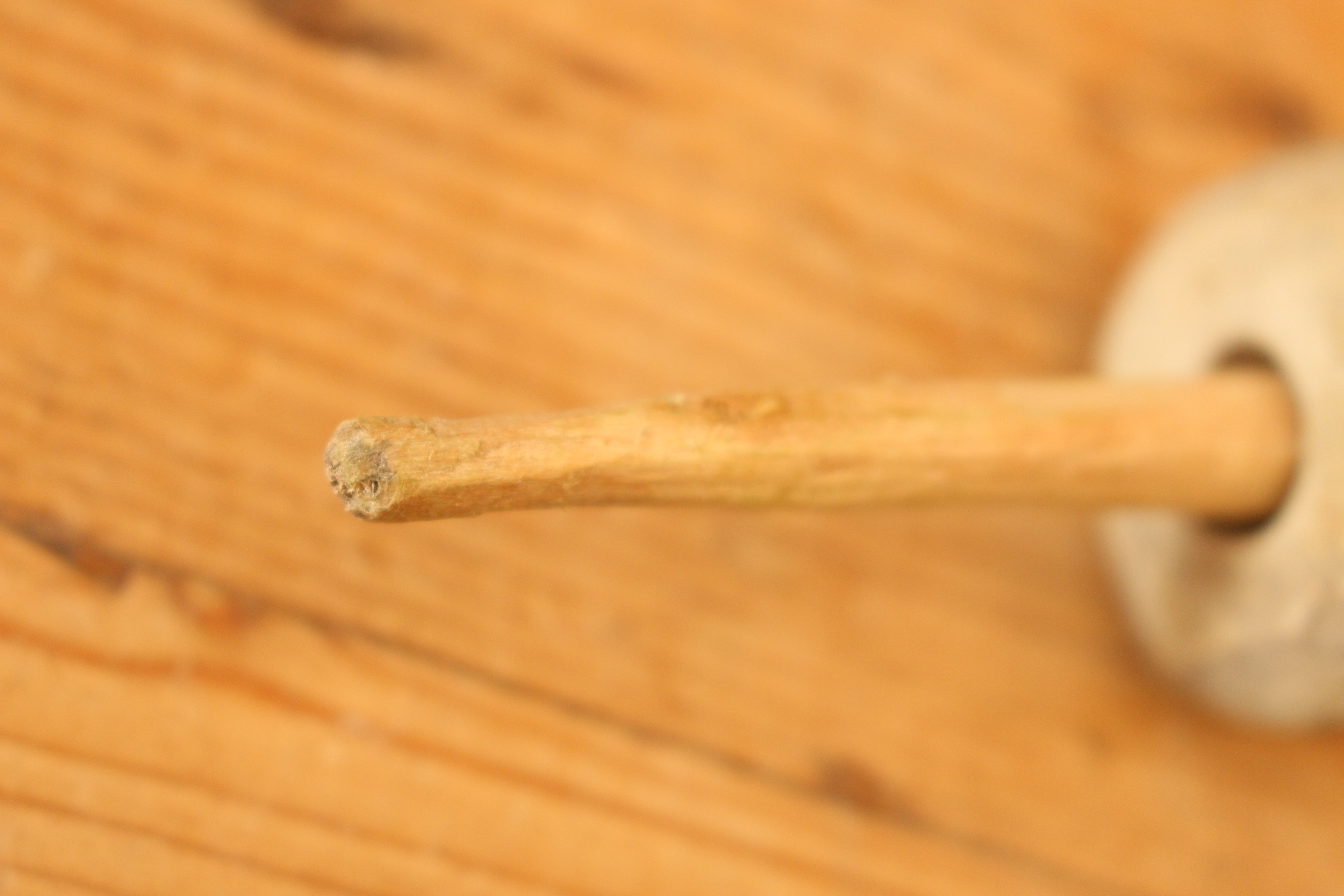
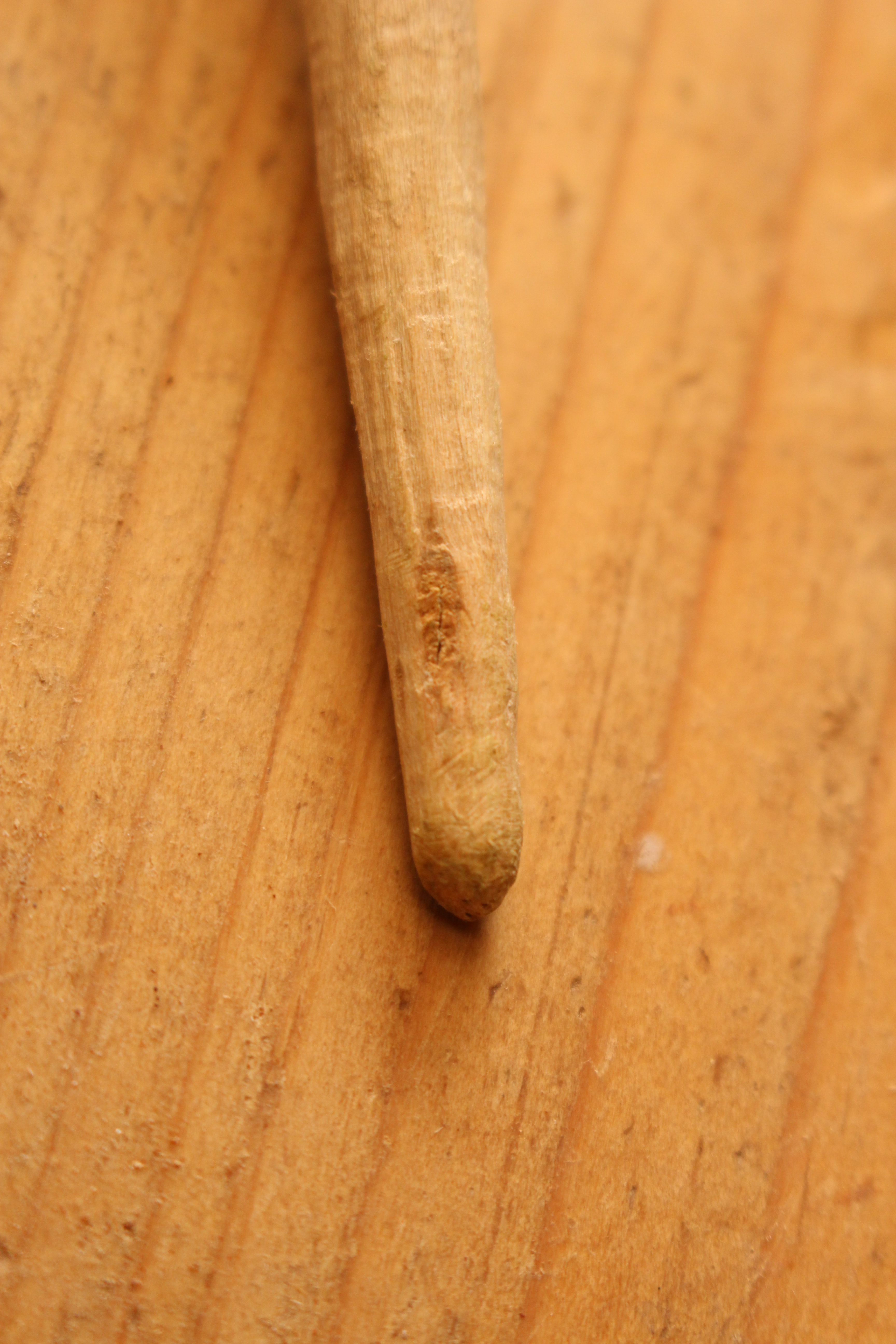
The whorl is light in weight so we can assume it was used to achieve a very fine thread, I just hope I can too!
 The Prehistoric Workshop